Fluxx Tech
Most wholesalers and distributors still send a PDF catalogue on WhatsApp. It was designed in Corel or Canva, it is 40 MB, prices are six months old, and half the items are out of stock. Buyers scroll, ask “price for item 27?”, and a salesperson types the answer.
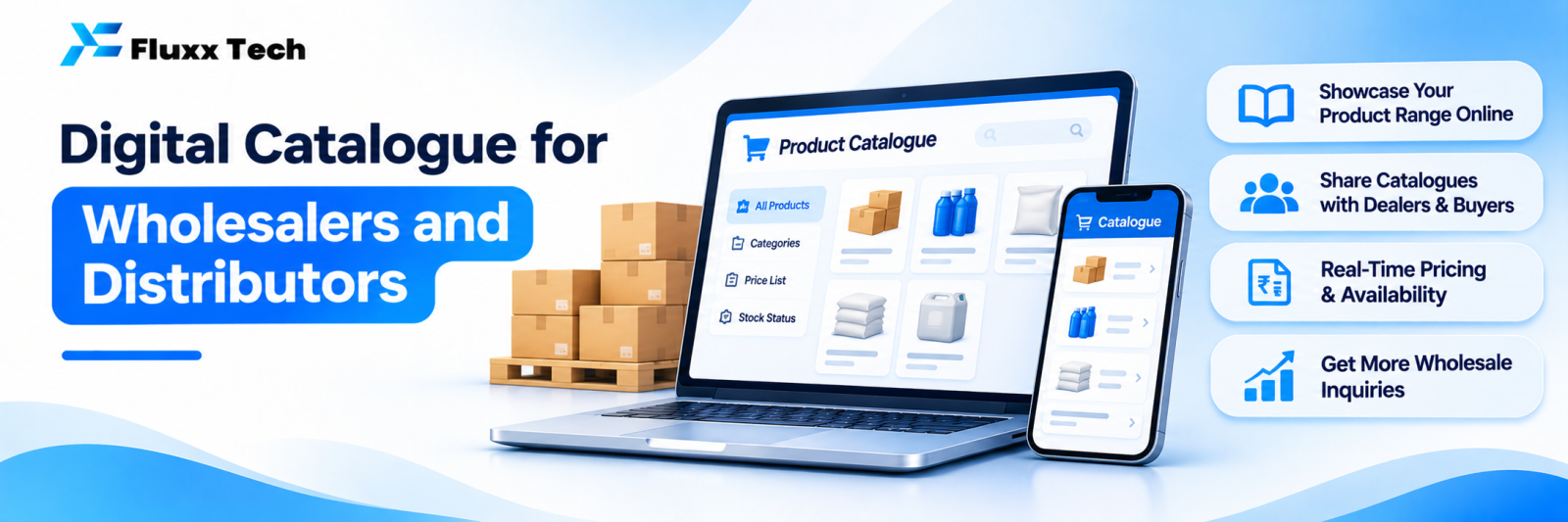
A digital catalogue fixes this. It is a live, searchable catalogue your buyers open on a phone.
Problems with PDF catalogues
• Prices go stale the day they are sent
• No stock information
• Heavy files that take time to download
• No search; buyers scroll through dozens of pages
• Cannot show dealer-specific pricing
• Cannot place an order
• No way to know who viewed what
What a digital catalogue should do
Feature | Why it matters |
Live prices | Change once, every buyer sees the update |
Dealer-specific rates | Each buyer logs in and sees their own pricing |
Stock availability | Fewer “is this available?” calls |
Search and filters | Find items by category, size, colour, code |
Clear product photos | Buyers decide faster |
Specifications and MOQ | Fewer repeat questions |
Share on WhatsApp | Send a link or a single product, not a 40 MB file |
Enquiry or order button | Turn browsing into orders |
PDF export | For buyers who still want one, generated with current prices |
Analytics | See which products get viewed and enquired about |
Public catalogue or private?
| Public | Private (login) |
Who sees it | Anyone, including competitors | Approved dealers only |
Prices | Often hidden or MRP only | Dealer-specific net rates |
SEO benefit | Yes, products can rank on Google | No |
Best for | Attracting new buyers | Serving existing dealers |
Many businesses run both: a public catalogue without net prices for discovery, and a private portal with real rates for dealers.
Sharing on WhatsApp
This is where digital catalogues earn their keep:
• Share a link to the whole catalogue, a category or a single product
• Each link opens instantly on a phone with current prices
• Buyers can reply directly with an order
• No file size problems
Keeping it updated
The catalogue is only useful if it is current. Decide:
• Who updates prices, and how often
• Where stock data comes from: manual, billing software or Tally
• Who adds new products and photos
Connecting the catalogue to your billing or inventory system removes most of this work. See our Tally integration guide.
From catalogue to orders
Once buyers browse digitally, adding an order button is a small step. See our dealer portal guide for what a full ordering portal includes.
What it costs
A digital catalogue with search, categories, WhatsApp sharing and an enquiry button typically costs less than a full ecommerce store. Adding dealer logins, net pricing and ordering costs more. Fluxx Tech pricing: [add your price].
Frequently asked questions
Will competitors see my prices? Not if you put prices behind a dealer login and keep the public catalogue price-free.
Can buyers still get a PDF? Yes. A good system generates a current PDF on demand.
Does a digital catalogue help on Google? A public catalogue can rank for product searches. A private one cannot, by design.