Fluxx Tech
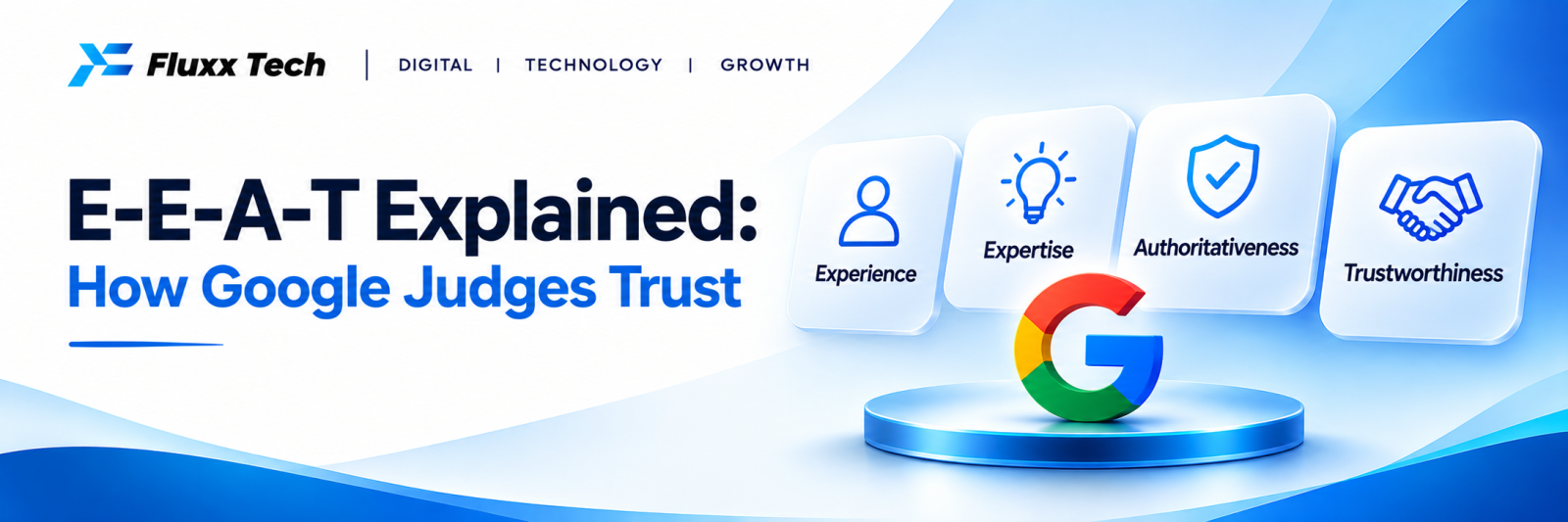
E-E-A-T stands for Experience, Expertise, Authoritativeness and Trustworthiness. It comes from Google’s Search Quality Rater Guidelines, which describe how human reviewers judge the quality of search results. E-E-A-T isn’t a single ranking factor, but it reflects what Google’s systems try to reward: helpful content from credible sources.
The four parts
Part | Question it answers | How to show it |
Experience | Has the creator actually done or used this? | Real examples, photos, case studies, first-hand tips |
Expertise | Does the creator have the knowledge or skill? | Qualifications, specialist knowledge, accurate detail |
Authoritativeness | Is the source recognised in its field? | Mentions, links, awards, memberships, reviews |
Trustworthiness | Can people rely on this site? | Accurate information, clear contact details, secure site, honest policies |
Trust is the most important; the others support it.
Why it matters more for some topics
Pages that could affect people’s health, finances, safety or major decisions, such as medical clinics, financial advice and legal services, are held to higher standards. Google calls these “Your Money or Your Life” topics.
Practical ways to show E-E-A-T
On every page
• Clear business name, address, phone and email
• About page with your story, team and experience
• Real photos of your team, premises and work
• HTTPS and a working, professional website
• Privacy policy and terms where relevant
In content
• Author names and short bios with relevant experience
• First-hand examples: “In our projects for Coimbatore clinics, we found…”
• Accurate, up-to-date facts, with sources for important claims
• Review and update dates on important articles
• Specialist review for health, legal and financial content
Off your site
• Genuine Google reviews and replies
• Mentions in local media, industry sites and associations
• Consistent business listings
• Speaking, awards and memberships where genuine
What hurts trust
• Anonymous content with no clear owner
• Outdated prices and information
• Exaggerated claims and guarantees
• Fake reviews or testimonials
• Hidden contact details
Frequently asked questions
Is E-E-A-T a ranking factor? Not a single direct factor. It describes qualities Google’s systems try to identify and reward.
Do small businesses need author bios? They help, especially on blog posts and advice content.
Can AI-written content show E-E-A-T? Only when real experts add genuine experience, check facts and take responsibility for the content.