Fluxx Tech
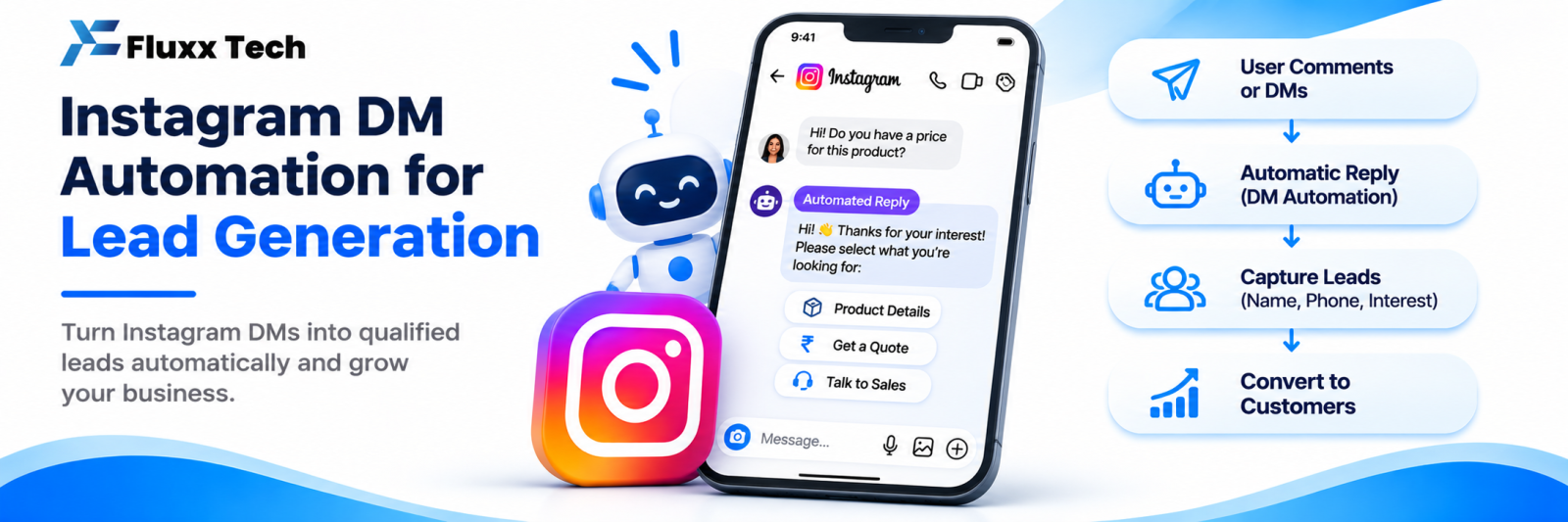
Instagram DMs are where enquiries arrive, and where most of them die. The conversation happens, the customer asks a price, somebody replies, and nothing is recorded. Next week nobody remembers who asked.
DM automation is not only about replying faster. It is about turning conversations into a pipeline you can work.
The pipeline
Stage | What happens | Automated? |
1. Trigger | Someone DMs you, or comments a keyword | – |
2. Instant reply | Welcome message with a menu or answer | Yes |
3. Qualify | One or two questions to understand the need | Yes |
4. Capture | Save name, number, interest, city, tag | Yes |
5. Route | Assign to the right person or team | Yes |
6. Human | Quote, consult, close | No |
7. Follow up | One nudge if the lead goes quiet | Partly |
8. Record | Mark won, lost or in progress | Partly |
Automation owns stages 2 to 5. That is where the leakage happens.
Qualify with one question, not seven
A bot that interrogates people loses them. Ask the one question that changes your answer:
Business | The one question |
Clothing | “Which size are you looking for?” |
Clinic | “Which date suits you?” |
Coaching | “Are you looking at the weekday or weekend batch?” |
Interiors | “Is this for a 1BHK, 2BHK or a villa?” |
Jewellery | “What’s your budget range?” |
Service business | “Which city are you in?” |
Then ask for contact details, and explain why: “Share your number and we’ll send the rate list on WhatsApp.”
What to capture
Minimum useful lead record:
• Instagram handle
• Name
• Phone number, if given
• What they asked about
• Source: which post, reel or keyword
• Date
• Tag: hot, warm, cold, or product category
• Status
The source field is what tells you which content actually generates business. Most businesses never record it and so never know.
Tagging that is actually used
Keep tags few and meaningful:
• By product or service
• By stage: new, quoted, follow-up, won, lost
• By city or branch
• By value, if that changes who handles it
Twenty tags means nobody tags anything.
Follow-up timing
Meta applies time windows to business messaging on Instagram, and those rules change. Within what is permitted:
• Immediately: the automated reply
• Within minutes: a human, if the question needs one
• After 24 hours of silence: one short nudge
• After that: move to WhatsApp or a phone call if you have the number, with consent
Do not send a third and fourth follow-up DM. People report and block, which harms your account.
Handover rules
Automation must step aside when:
• The customer types “call”, “agent”, “human”, “talk”
• The fallback fires twice
• Price negotiation starts
• There is a complaint or a return
• The requirement is custom
Announce the handover: “Priya from our team will take it from here.”
Route to the right person
• By product line
• By language: Tamil or English
• By branch or city
• By value, with high-value enquiries to a senior person
• Round robin for general enquiries
What to measure
Metric | Target behaviour |
First response time | Seconds, via automation |
Human response time | Minutes, in working hours |
Leads captured per week | Rising |
Leads with a phone number | A high share; if low, your ask is badly worded |
Source breakdown | Tells you which content to make more of |
Enquiry-to-customer rate | The real quality measure |
Revenue from Instagram leads | Whether the channel earns |
Take your data with you
Make sure you can export your leads. A lead list locked inside a tool you may leave is not an asset. Export regularly, and keep a copy in your own CRM or sheet.
Frequently asked questions
Should I ask for a phone number in the first message? Give something useful first, then ask. Asking immediately reduces replies.
Can I automate follow-ups? One, within the messaging rules Meta currently allows. Check the current policy before building a sequence.
How many DMs become customers? It varies widely by business. Measure your own rate and work on improving it rather than comparing.