Fluxx Tech
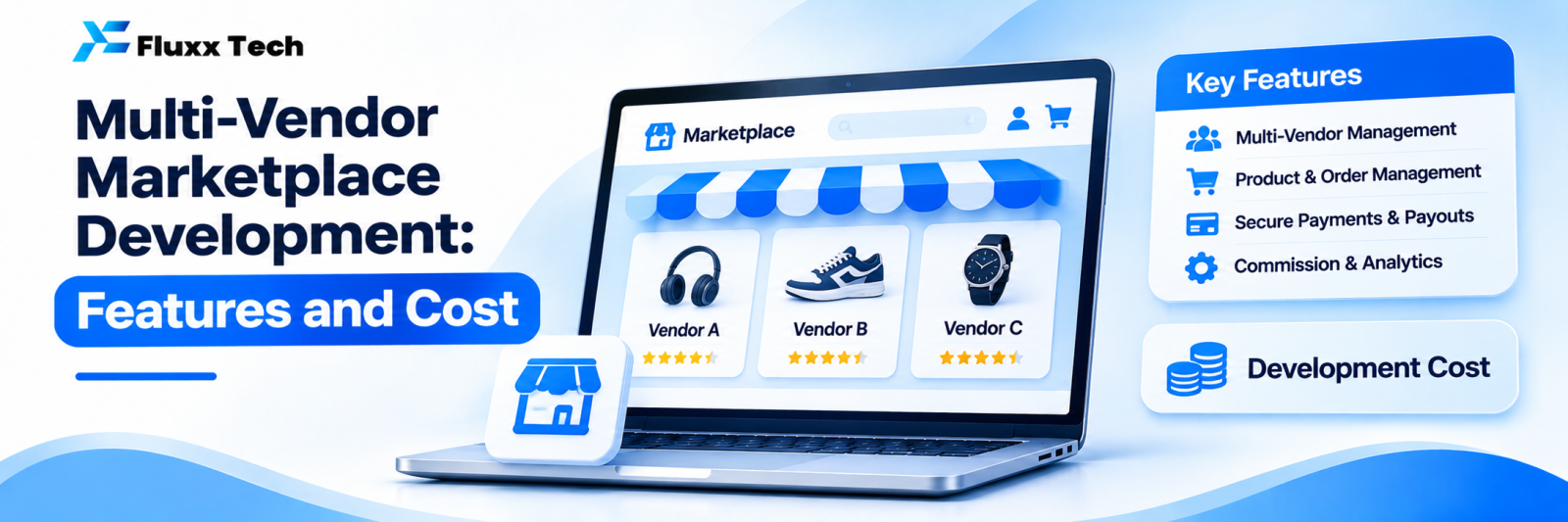
A marketplace connects many sellers with many buyers, and takes a commission. It is a tempting model, but far more complex than a single-brand online store: you are building software for three audiences at once, and you must solve the chicken-and-egg problem of attracting both sellers and buyers.
Who it suits
• Local marketplaces: a city’s shops, restaurants or services
• Niche product marketplaces: handloom, machinery spares, organic produce
• B2B marketplaces connecting manufacturers and buyers
• Service marketplaces: technicians, tutors, event vendors
The three sides you must build
1. Buyer side
• Browse and search across vendors
• Product pages with vendor information and ratings
• Cart, possibly with items from several vendors
• Checkout, payments and order tracking
• Returns, refunds and support
• Reviews
2. Vendor side
• Registration and KYC
• Product listing and bulk upload
• Inventory and pricing management
• Order management and dispatch
• Earnings, commissions and payout statements
• Performance reports
3. Admin side
• Vendor approval and verification
• Category and catalogue control
• Commission rules by category or vendor
• Payout processing
• Dispute handling
• Content moderation
• Platform-wide reports
The hard parts
Split payments and payouts. When one order contains items from three vendors, money must split correctly after commission. Check that your payment gateway supports split settlement or route-based payouts before you design this.
Logistics. Who ships: vendors, you, or a courier aggregator? Multi-vendor orders may ship separately.
Returns and refunds. Policies must be clear about who bears the cost.
Quality control. Bad vendors damage the whole platform’s reputation.
Taxation and invoicing. Each vendor’s invoice, commission invoices and reporting need to be correct. Take professional advice on GST and marketplace compliance rules for your model.
Approximate cost
Approach | Approximate cost | Notes |
Marketplace plugin on an existing platform | Lower | Fastest, limited flexibility |
Ready marketplace software, customised | Medium | Good balance for many launches |
Fully custom build | ₹8,00,000+ depending on scope | Full control, longest timeline |
Plus mobile apps | Additional | Buyer, vendor and delivery apps |
Fluxx Tech pricing: [add your price or “after a scoping call”].
Budget separately for ongoing costs: hosting, payment fees, support staff and marketing, which is usually the largest.
Launch strategy
1. Start narrow. One city, one category.
2. Recruit vendors manually before launch; an empty marketplace converts nobody.
3. Solve one side first. Many marketplaces subsidise buyers early to attract vendors, or vice versa.
4. Keep the first version simple. Browsing, ordering, payments and payouts. Add ratings, wallets and subscriptions later.
5. Measure: active vendors, orders per vendor, repeat buyers, and commission earned per order.
Frequently asked questions
Can I start with a ready platform and move to custom later? Yes, many do. Migration takes work, so keep your data exportable.
What commission should I charge? It depends on category margins and competition. Research comparable marketplaces in your niche.
How long does it take to build? A focused first version often takes three to six months; larger platforms take longer.