Fluxx Tech
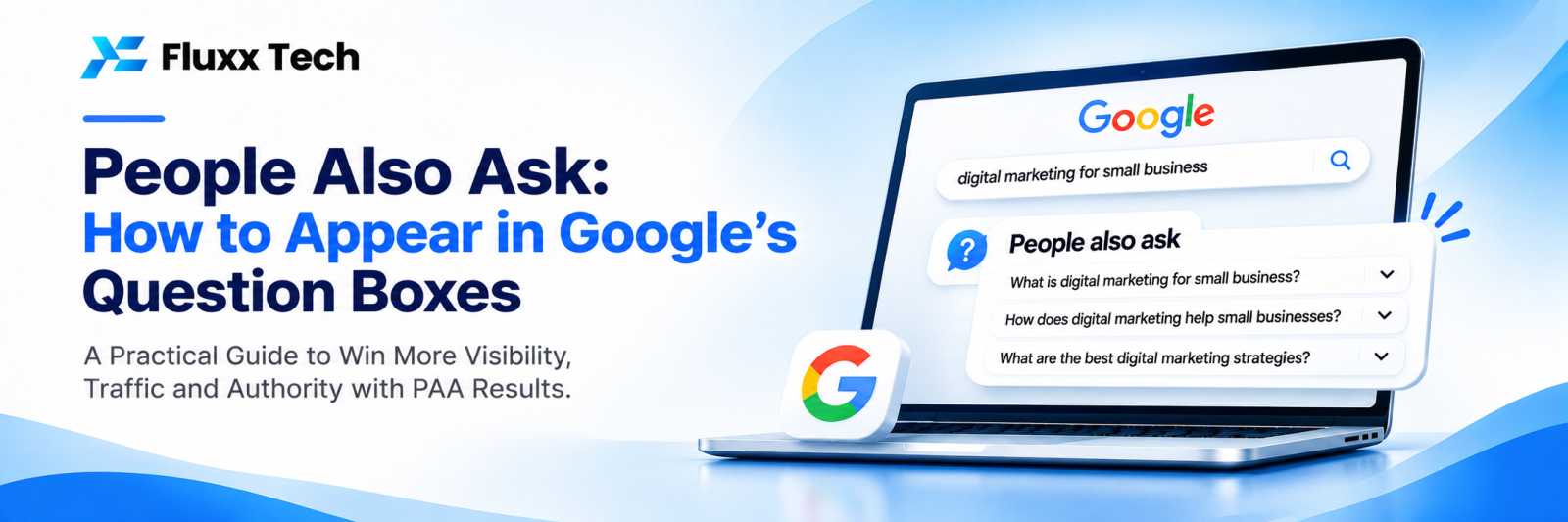
“People Also Ask” (PAA) is the box of expandable questions that appears in many Google searches. Each answer quotes a web page, with a link. These boxes show exactly what your customers wonder about, and appearing in them adds visibility.
Why PAA matters
• Shows real questions related to your keywords
• Gives extra visibility beyond regular rankings
• Questions often reflect objections that stop customers buying
• Answers can lead readers to your site
How to find PAA questions
1. Search your main keywords on Google
2. Note every question in the PAA box
3. Click a few questions; Google loads more related ones
4. Repeat for each service and location
5. Group questions by topic and buying stage
Example for “website design cost”: “How much does a website cost in India?”, “Is ₹10,000 enough for a website?”, “How long does it take to build a website?”
How to structure answers
• Use the question as an H2 or H3, or in an FAQ section
• Answer directly in 40–60 words immediately below
• Then add detail, examples and links
• Use lists or tables where the question involves steps or comparisons
• Keep facts accurate and current
Where to use PAA questions
• FAQ sections on service pages
• Blog posts built around a cluster of related questions
• Separate guides for big questions
• Video topics and social media posts
Add FAQ schema
FAQ schema helps search engines understand your questions and answers. Mark up only FAQs that are visible on the page.
Frequently asked questions
Do I need to rank on page one to appear in PAA? It helps. PAA answers usually come from pages Google already sees as relevant.
How long should PAA answers be? A short, direct answer first, then expand.
Do PAA questions change? Yes. Check them every few months for new topics.