Fluxx Tech
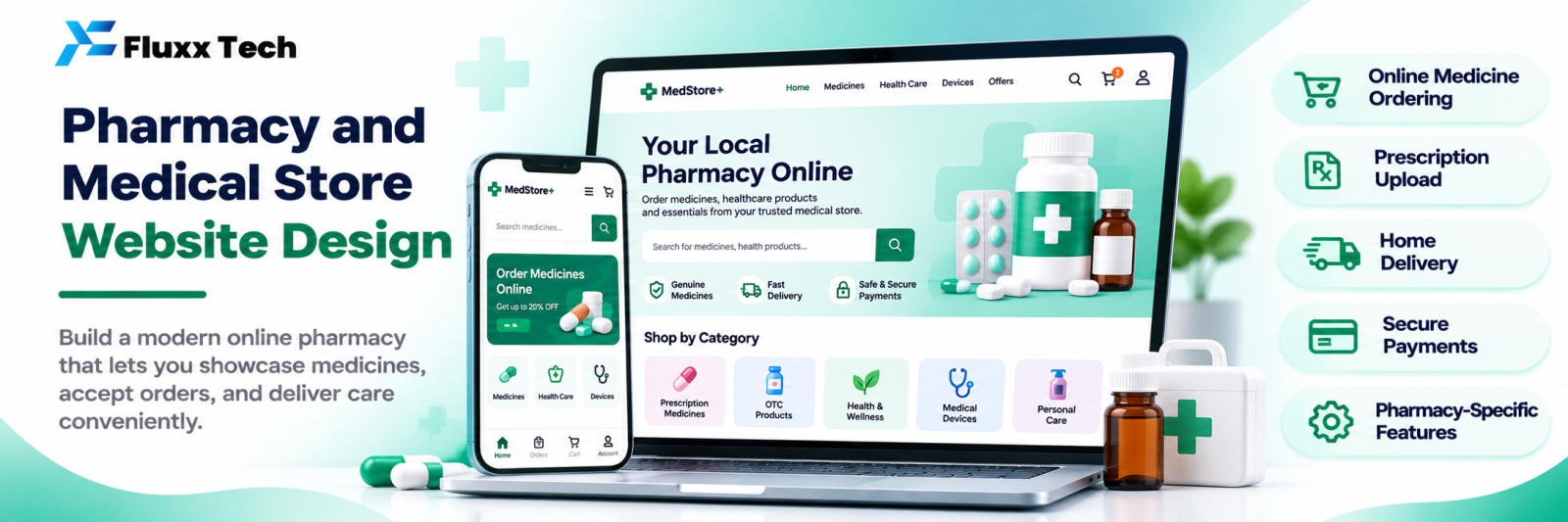
Customers search for a nearby chemist at odd hours, for a specific medicine, or for home delivery. A pharmacy with no web presence is invisible in those moments. A simple, well-built site plus a complete Google Business Profile usually brings more walk-ins and calls than anything else a medical store can do online.
Settle compliance first
Selling medicines online in India is regulated. Rules cover licensing, prescription handling, record keeping and which categories may be sold at a distance, and they have changed over time.
Before building anything that takes medicine orders online, confirm with your pharmacy licensing authority and a legal adviser what your licence permits. Many pharmacies run an enquiry-and-delivery model rather than full ecommerce, precisely because of this.
This article covers website and marketing design. It is not legal advice.
Two models
Model | How it works | Complexity |
Information and enquiry | Site shows store details, services and products; customers call, WhatsApp or request delivery; the pharmacist handles the order | Low |
Online ordering | Cart, prescription upload, payment, delivery tracking | High, with regulatory requirements |
Most single-store pharmacies get better returns from the first model, done well.
What the site should include
Essentials
• Store name, full address, map and directions
• Opening hours, including whether you are open late or 24 hours
• Phone number as a tap-to-call button
• WhatsApp button for enquiries and prescription photos
• Services: home delivery, generic alternatives, health devices, diagnostics tie-ups
• Delivery area and timing
• Payment methods accepted
Useful additions
• Prescription upload or WhatsApp flow with clear instructions
• Product categories: OTC items, baby care, nutrition, devices, personal care
• Health check device rentals or sales
• Insurance or scheme acceptance, if applicable
• Pharmacist profile and registration details, which build trust
• Clear statement that prescription medicines need a valid prescription
Content that attracts searches
• “Medicine home delivery in [area]”
• “24 hour pharmacy in [city]”
• Pages for conditions you serve, written carefully and without medical claims
• Blog posts on storage of medicines, monsoon health, diabetes care devices
Keep health content factual and conservative. Never give dosage advice or treatment claims on a pharmacy website.
Local SEO matters most
For a pharmacy, the map pack beats everything:
1. Complete your Google Business Profile: category, hours, phone, photos, services
2. Mark correct hours, including holidays and night service
3. Collect reviews steadily and reply to them
4. Add your address consistently across directories
5. Create a page for each branch if you have more than one
6. Add LocalBusiness and Pharmacy schema markup to the site
Home delivery flow that works
1. Customer sends a prescription photo or medicine list on WhatsApp
2. Staff confirms availability and total
3. Customer confirms, and pays online or on delivery
4. Delivery with a confirmation message
This needs no complex software to start. A WhatsApp Business setup with saved replies and a simple order log is enough for most stores, and can later be automated.
Privacy
Prescriptions and health details are sensitive.
• Store prescription images securely, with restricted access
• Do not post customer prescriptions or health details anywhere
• Have a visible privacy policy saying what you collect and why
• Train staff on handling patient information
Frequently asked questions
Can a pharmacy sell medicines online? It depends on your licence and current regulations. Confirm with your licensing authority and a legal adviser before building an ordering system.
What brings the most customers for a medical store? A complete Google Business Profile with correct hours and good reviews, plus a WhatsApp number for enquiries.
Do I need a full ecommerce site? Usually not at first. An informative site plus WhatsApp ordering is faster to launch and easier to run.