 Fluxx Tech
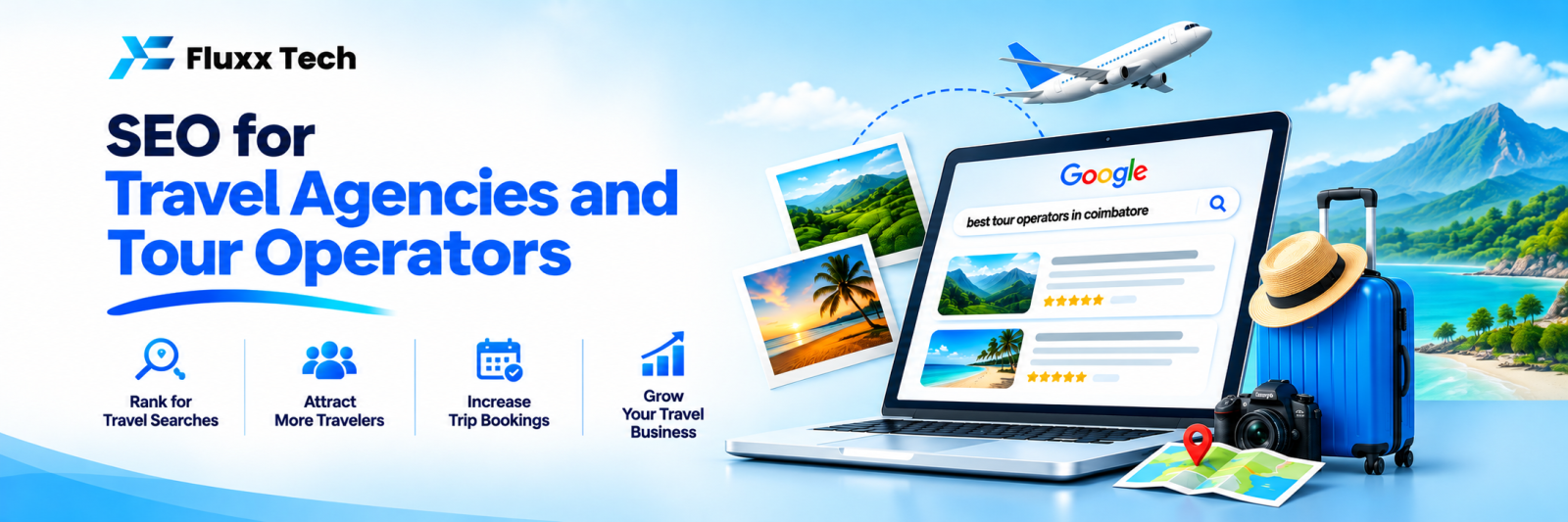
Travellers search for trips months and weeks before they book: “Kerala tour package from Coimbatore”, “Ooty family trip itinerary”, “Char Dham yatra package”, “Singapore honeymoon package from Chennai”. Large travel portals dominate broad searches, but local agencies can win specific, high-intent searches.
1. Package pages
A page for each package:
• Destination, duration and departure city
• Day-by-day itinerary
• Inclusions and exclusions
• Hotels, transport and meals
• Price per person or starting price
• Photos and maps
• Enquiry and WhatsApp buttons
2. Destination guides
Helpful guides attract travellers earlier in planning:
• Best time to visit
• Things to do and places to see
• How to reach from your city
• Budget tips
• Local food and culture
Link each guide to related packages.
3. Departure-city keywords
Local agencies can target searches from their city: “tour packages from Coimbatore”, “pilgrimage tours from Tamil Nadu”, “group tours from Madurai”.
4. Google Business Profile and reviews
• Accurate category, such as “Travel agency” or “Tour operator”
• Office photos and trip photos
• Steady reviews from travellers, with replies
• Posts for new packages, festival trips and offers
5. Seasonal planning
Plan content and pages ahead of peak seasons: summer holidays, festival breaks, winter trips and pilgrimage seasons.
6. Trust signals
• Registration and accreditations where applicable
• Clear cancellation and refund policies
• Traveller photos and testimonials (with permission)
• Transparent pricing
7. Visual content
Videos, reels and photo galleries from real trips help both SEO and conversions.
Frequently asked questions
Can local agencies compete with big travel portals? Yes, on specific packages, departure cities, niche trips and personal service.
Should we show package prices? Starting prices help travellers compare and enquire.
How early should seasonal pages go live? Several weeks to a few months before the season, so they’re indexed in time.