Fluxx Tech
Every local business that wants customers from Google faces the same choice: pay for ads now, or invest in SEO that builds over time. The honest answer is usually “both, in the right order”. But budgets are real, so this guide helps you decide where to start.
The core difference
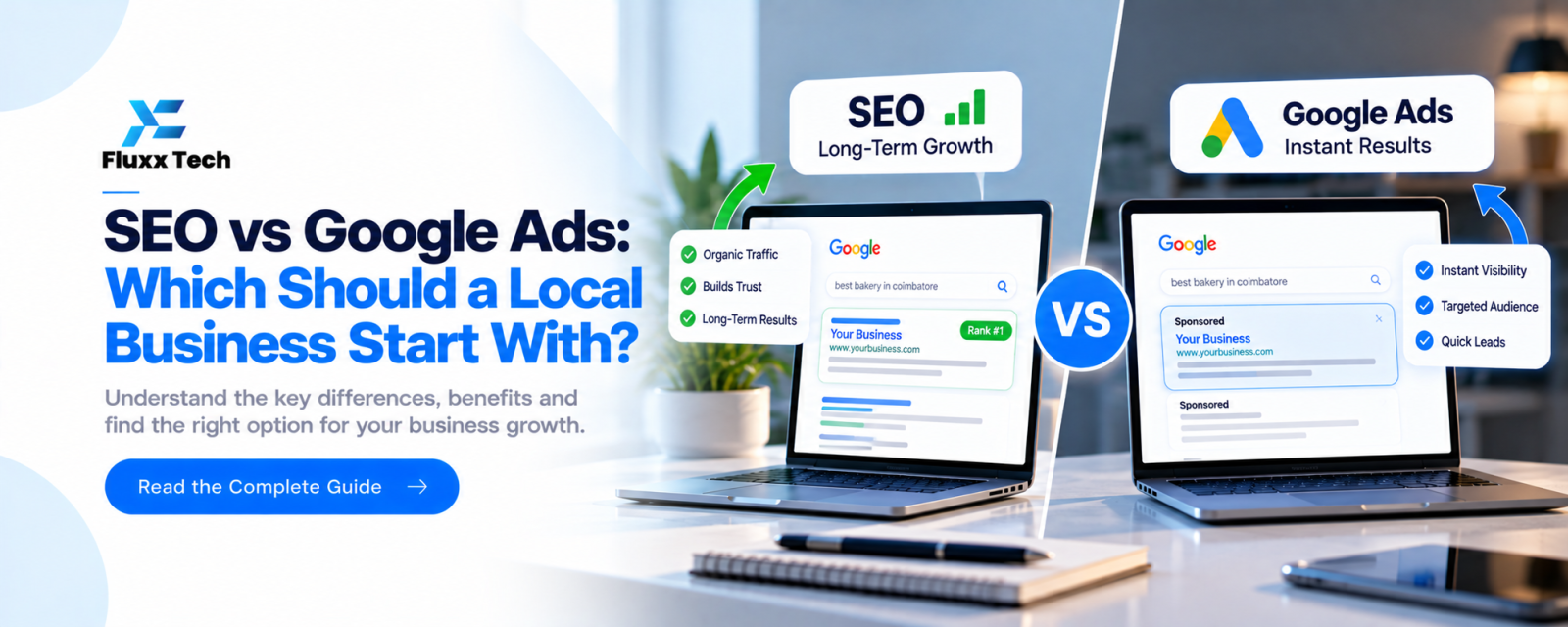
• Google Ads: you pay Google for each click. Your ad can appear at the top of results the same day. When you stop paying, the traffic stops.
• SEO: you improve your website, content, Google Business Profile and reputation so Google ranks you for free. Results take months but keep coming.
Side-by-side comparison
| Google Ads | SEO |
Speed | Same day to a few days | Usually 3–6 months for competitive terms |
Cost model | Pay per click, plus management | Monthly investment in work, no per-click cost |
When you stop | Traffic stops immediately | Rankings fade slowly |
Trust | Some users skip ads | Organic and Maps results earn more trust |
Control | Choose keywords, locations, timing | Less direct control; Google decides rankings |
Testing | Quick to test offers and keywords | Slower feedback |
Long-term value | Low once spending stops | Builds an asset |
When to start with Google Ads
• You have just launched and need enquiries now
• You are opening a new branch or service
• You run seasonal offers (admissions, festivals, wedding season)
• Your market is competitive and SEO will take a long time
• You want to test which services and keywords bring buyers
When to start with SEO
• You can wait a few months for results
• Clicks in your industry are expensive
• You want a steady, long-term source of leads
• Your customers research before buying and read content
• Your local competition online is weak (a big opportunity)
The local business sweet spot: Google Maps
For local searches, the Google Maps pack often gets the most clicks. Getting there is part of SEO, but it can move faster than website rankings:
• A complete Google Business Profile
• Steady reviews with replies
• Accurate categories and consistent business details
• Regular posts and photos
For many local businesses, this is the best first step, whatever else they do.
A simple plan for a small budget
Months 1–2
• Set up and optimise Google Business Profile
• Fix website basics: speed, mobile, titles, service pages, contact buttons
• Run a small Google Ads Search campaign on your most profitable service
• Track calls, forms and WhatsApp clicks
Months 3–6
• Use ad data to see which keywords bring real customers
• Build SEO pages and blog posts around those keywords
• Earn reviews and local citations
• Keep ads running for high-value services
Month 6 onwards
• As organic rankings grow, reduce ad spend on keywords where you rank well
• Shift budget to new services, new areas or remarketing
How to measure which is working
Compare channels on:
• Cost per lead: total spend divided by enquiries
• Lead quality: how many enquiries become customers
• Cost per customer: total spend divided by new customers
Set up Google Analytics 4, call tracking and WhatsApp click tracking so you can see each channel separately.
Frequently asked questions
Is SEO cheaper than Google Ads? Over the long term, often yes, because you do not pay per click. In the short term, SEO needs investment before results appear.
Can Google Ads help my SEO? Not directly in rankings, but ad data shows which keywords bring customers, which guides your SEO.
What if I can only afford one? If you need enquiries this month, start with a small, well-targeted ads campaign plus your Google Business Profile. If you can wait, start with SEO and Google Business Profile.