 Fluxx Tech
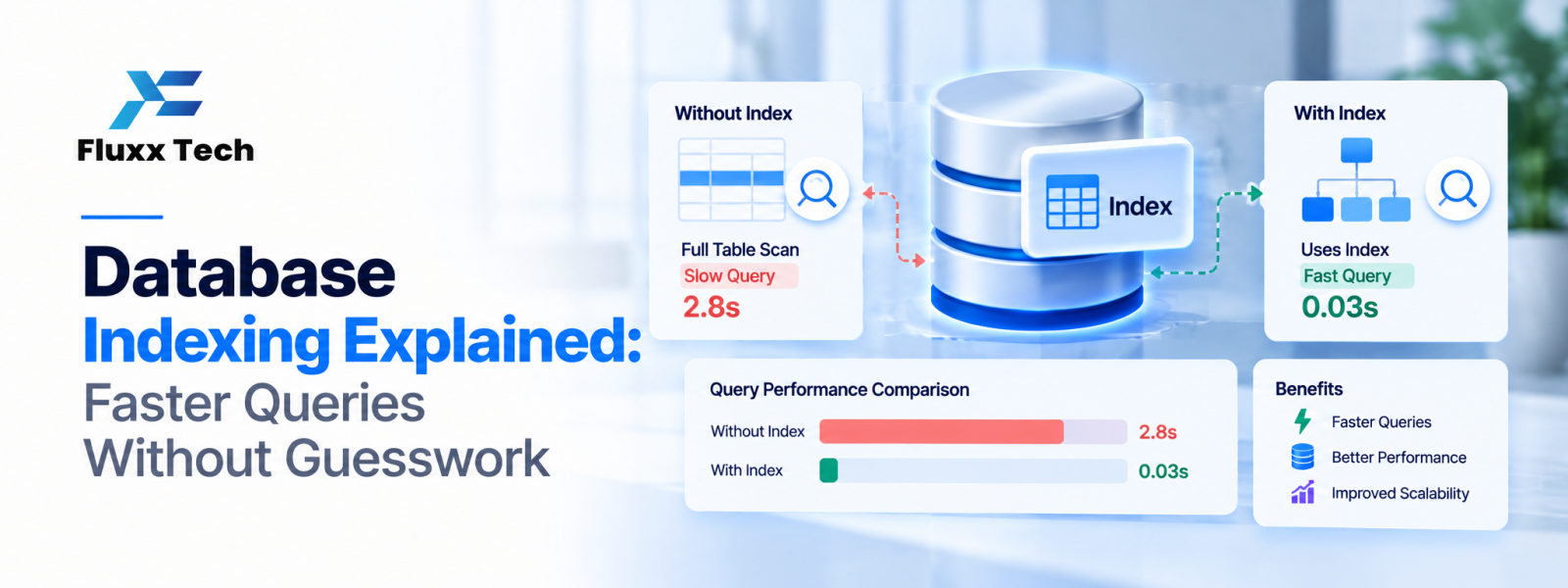
As an application grows, queries that once felt instant can slow down. Indexes help a database locate rows without scanning an entire table, but adding them blindly wastes storage and can slow writes. Effective indexing begins with workload evidence, execution plans and measured changes.
Understand what an index does
An index is an additional data structure that helps locate rows using selected columns. It may improve filtering, sorting or joins, depending on the database and query. Indexes occupy storage and must be maintained when data changes.
Find candidates from real queries
Review slow-query logs, traces and frequent query patterns. Examine WHERE conditions, JOIN keys, ORDER BY clauses and pagination. A frequently filtered column may be a candidate, but selectivity, table size and query shape matter.
Design composite indexes carefully
A composite index covers multiple columns. Column order affects which queries can use it efficiently. An index beginning with tenant_id and created_at may help tenant-specific date ranges, but not every query that filters only by created_at. Validate the design with the actual database engine.
Read plans and benchmark
Execution plans reveal how the database expects to retrieve and combine data. Look for expensive scans on large tables, sorts, poor row estimates and repeated lookups. Compare plans with representative data and test changes safely before production deployment.
Review indexes as workloads evolve
An index may become redundant when queries change or another index is introduced. Review usage and write performance periodically. Use supported database tools to identify duplicate or unused indexes, and avoid removing an index based on a short observation window.
Common Mistakes to Avoid
Common mistakes include indexing every column, testing only with tiny datasets and forgetting write costs. Measure the real workload and account for the database engine's behaviour.
Frequently Asked Questions
Do indexes always make queries faster?
No. They help specific access patterns but add maintenance cost and may not be selected by the query planner.
How many indexes should a table have?
There is no universal ideal count. Keep the set that supports important queries while balancing storage and write overhead.
Conclusion
Treat indexing as a measured performance change. Identify a slow query, inspect its plan, test a targeted index and verify the result under realistic data and traffic.