Fluxx Tech
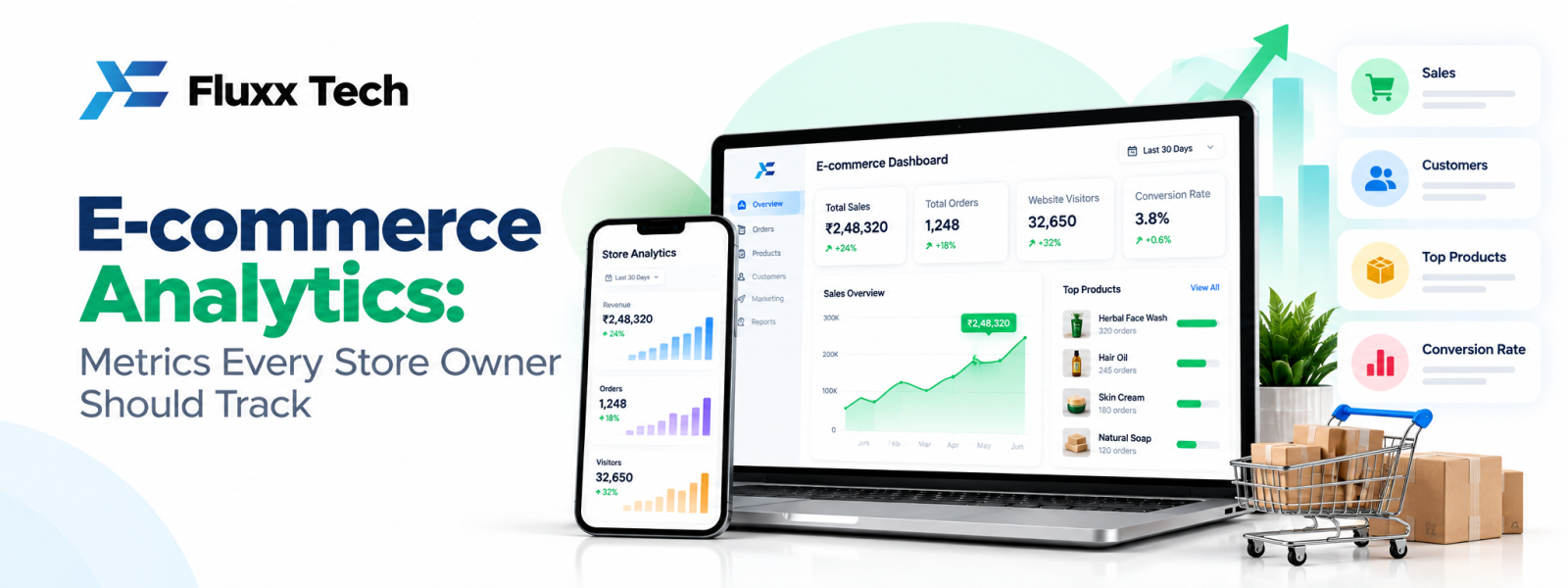
Ecommerce analytics helps store owners understand how customers discover products, use checkout and become buyers. The goal is to measure useful behaviour accurately and turn it into decisions, rather than collecting numbers that nobody acts on.
Define the business requirements
Track relevant visits by channel, campaign and landing page. Traffic quality matters: more visitors are not useful if they do not match the intended audience.
Build the core workflow
Define conversion rate consistently and review it by device, channel and product category where the data is sufficient. Investigate checkout errors, stock availability and changes in audience mix.
Connect operations and technology
Average order value is commonly revenue divided by number of orders for a defined period. State whether discounts, refunds, tax or shipping are included and consider margin alongside basket size.
Make the customer experience reliable
Measure checkout steps, acquisition cost, cancellations, delivery delays and repeat purchases. These metrics help explain performance beyond the initial click.
Measure performance and improve
Verify analytics tags and purchase events, avoid duplicate events and reconcile reports with order records. Review operational issues frequently and broader trends on a consistent schedule.
Conclusion
In conclusion, ecommerce analytics should support a clear business need and a dependable customer experience. Start with the essential workflow, test it with real users and verify that product, order and operational information stays accurate. Use customer feedback and measurable results to prioritise improvements, and add complexity only when the business is ready to maintain it.
Frequently Asked Questions
What should a business consider when choosing ecommerce analytics?
Start with the business model, customer needs, operational workflows, integrations, security and total ongoing cost. Test important scenarios before committing.
Should every business build all features at launch?
No. Begin with essential customer and admin workflows, then add features when feedback and operational data show a clear need.
What should be checked before publishing or launching?
Verify real platform capabilities, current provider or regulatory requirements, customer communication, payment states and support processes.