 Fluxx Tech
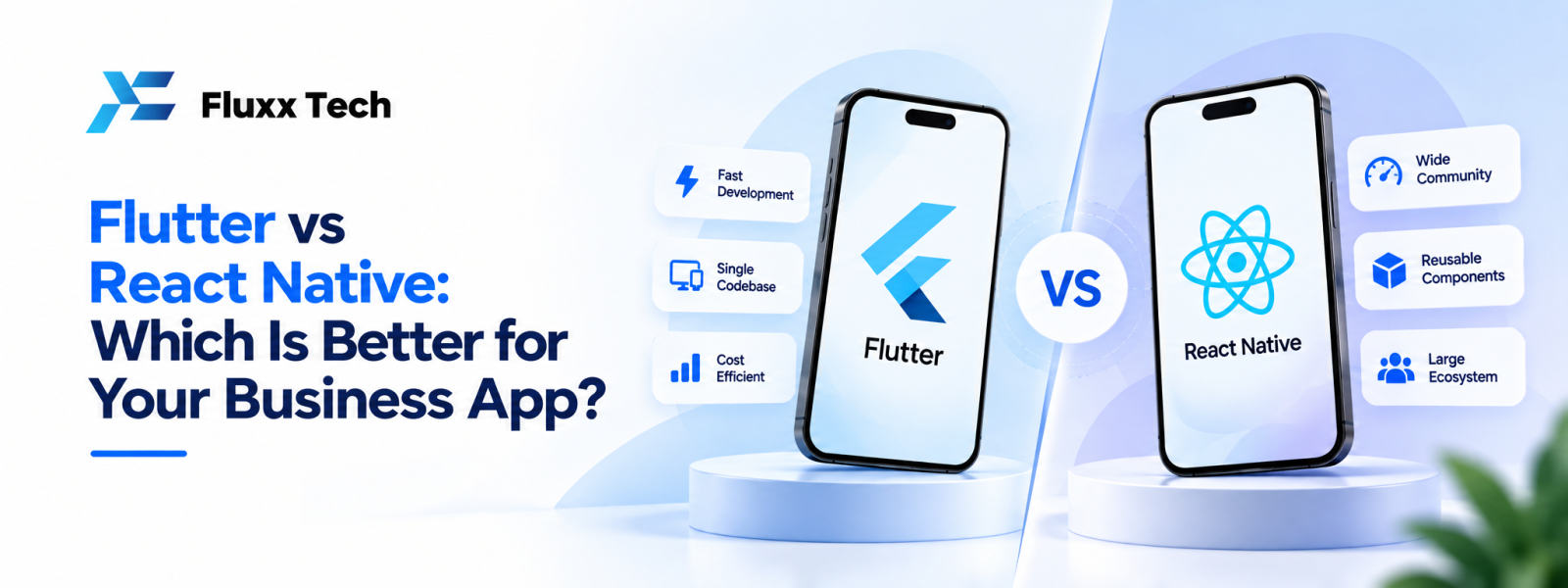
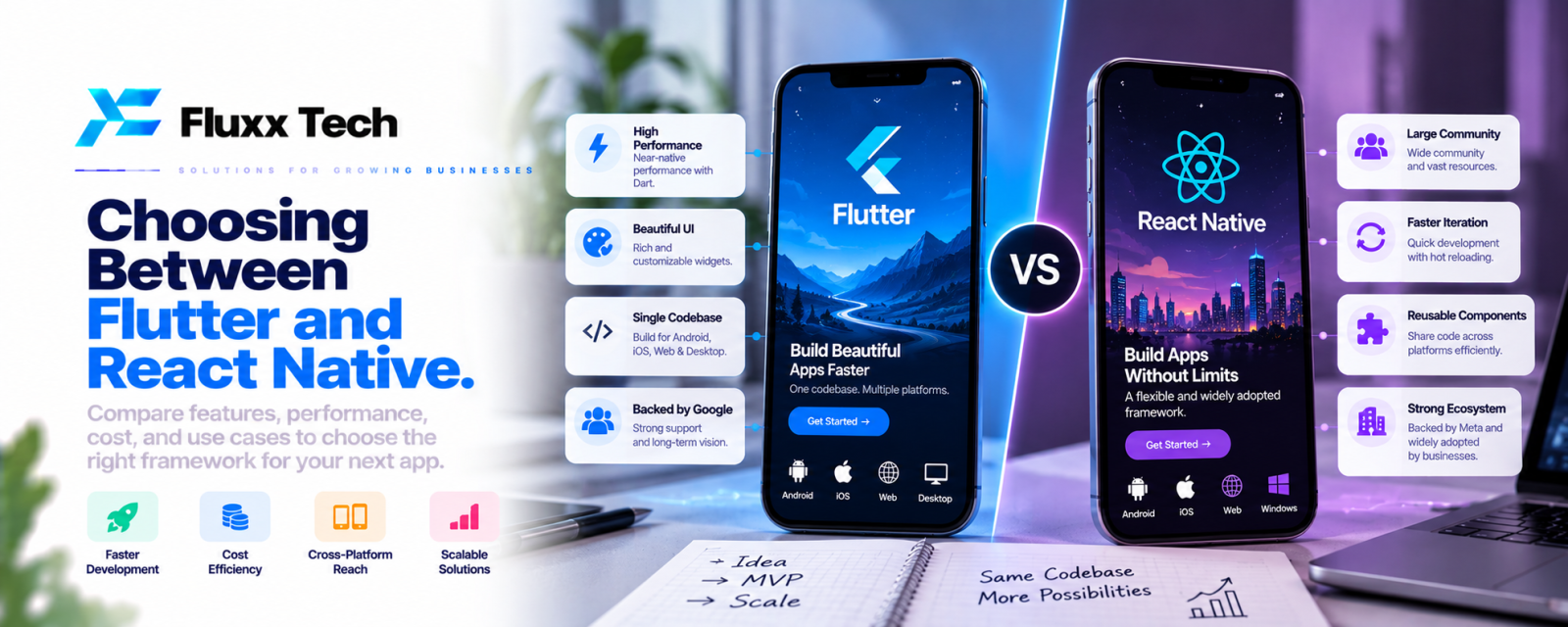
Businesses that want to launch on Android and iOS often compare Flutter vs React Native before choosing a technology. Both frameworks can support cross-platform development, but the right choice depends on the app's features, design, integrations and the team's experience. There is no universal winner for every project. A clear comparison should focus on user needs, technical constraints and long-term support rather than trends alone.
What is Flutter?
How it works
Flutter is a UI development toolkit from Google that uses the Dart programming language. It allows teams to build interfaces and application logic that can be shared across supported platforms.
Potential strengths
Flutter can be useful when a product needs a consistent, highly customised interface and a shared codebase. Its widget-based approach gives developers tools for building reusable UI components.
Points to evaluate
Teams should review plugin support, platform-specific features, app size, accessibility, performance and the availability of developers with relevant experience. Native integrations may still be needed.
What is React Native?
How it works
React Native is a framework for building mobile applications with React and JavaScript or TypeScript. It enables developers to create mobile interfaces while sharing code across platforms.
Potential strengths
It may fit teams with existing React or JavaScript experience. Reusable components and shared business logic can help coordinate development across platforms.
Points to evaluate
Review library maintenance, native module requirements, platform-specific behaviour and compatibility with the app's dependencies. The quality of the implementation matters more than the framework name.
Flutter vs React Native: key decision factors
UI and user experience
Both can support polished mobile interfaces. Flutter offers a widget-based approach, while React Native uses React concepts and native platform components or other rendering approaches depending on implementation. Prototype critical screens before deciding.
Team skills
Existing team experience affects productivity, code quality and maintenance. A team already proficient in React may ramp up differently from one experienced with Dart and Flutter.
Integrations and device features
List required capabilities such as camera, location, Bluetooth, payments, notifications or background tasks. Verify library support and test important integrations early.
Performance and complexity
Performance depends on the workload, architecture, implementation and device capabilities. Test demanding workflows rather than assuming the framework alone determines performance.
Maintenance and hiring
Review the long-term availability of developers, dependency maintenance, documentation and upgrade practices. A framework is a long-term product decision, not just a launch choice.
How to select the best framework for mobile app
Write requirements first
Describe user journeys, device features, backend integrations, offline needs and expected usage. Rank the requirements by importance.
Build a proof of concept
For high-risk features, create a small prototype to test the technology before committing to the full project.
Compare delivery plans
Ask each development team to explain architecture, testing, release management, code ownership and maintenance.
Consider future changes
Think about new modules, more user roles, analytics and integrations. Select an approach the team can support over time.
When should a business consider native development?
Specialised platform needs
An app that depends heavily on platform-specific capabilities may benefit from native implementation or a hybrid approach with native modules.
Complex performance requirements
Real-time processing, graphics-intensive tasks or unusual device interactions should be tested carefully before selecting a framework.
Existing code and systems
A business with an existing native app may need to consider whether replacing or extending it provides real value. Migration itself creates cost and risk.
Frequently Asked Questions
Is Flutter better than React Native?
Neither is universally better. Compare the application's requirements, team skills, integrations and maintenance needs.
Can both frameworks support Android and iOS?
Yes, both can support development for Android and iOS, although some features may require platform-specific code.
Which framework is easier to maintain?
Maintainability depends on architecture, code quality, testing, dependencies and the skills available to the business.
Can I use my existing React developers for React Native?
Their experience can help, but mobile development also requires learning platform behaviours, tooling and device-specific testing.
Should I choose a framework before writing requirements?
No. Define the business needs and technical requirements first, then evaluate the frameworks against them.
Conclusion
Flutter vs React Native is a decision about technical fit, team capability and long-term product needs. Both can be suitable for cross-platform app development. Define the requirements, test high-risk features and compare support plans before selecting the best framework for mobile app delivery.