 Fluxx Tech
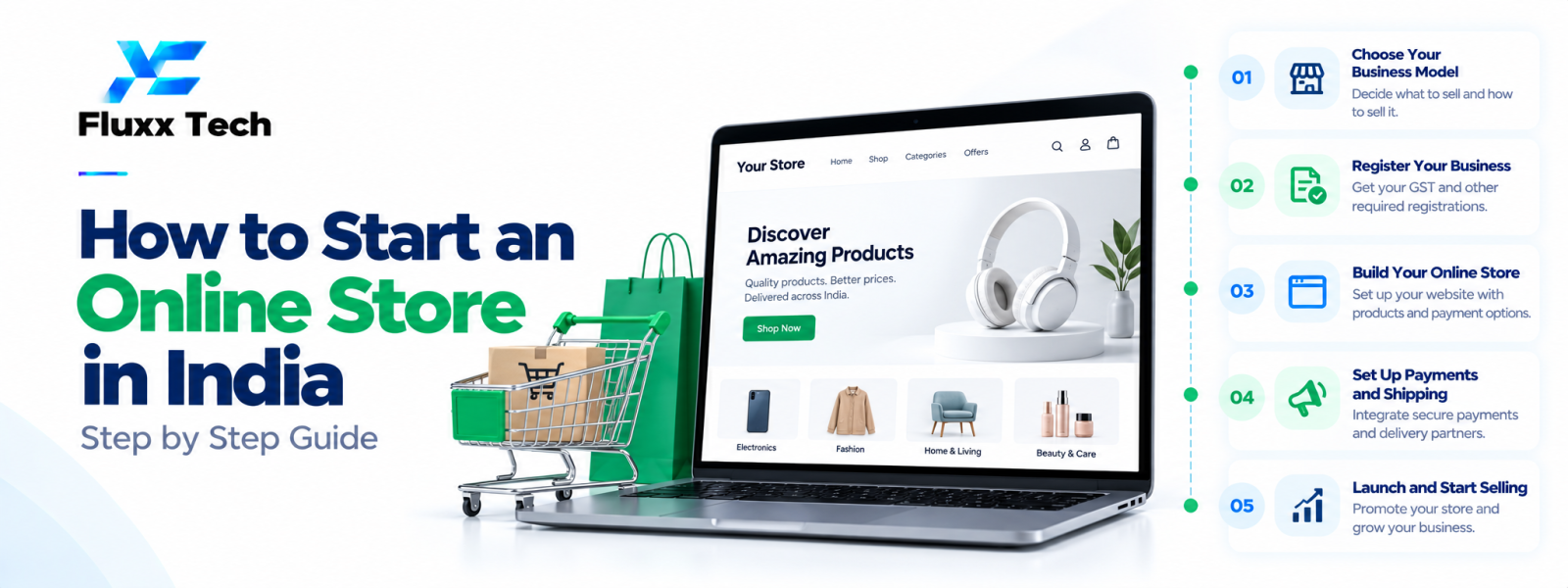
Learning how to start an online store in India begins with a clear product idea, a defined customer group and a practical plan for accepting and delivering orders. You do not need to launch with hundreds of products or a complicated website. Start with a focused catalogue, make buying easy, and improve the store using real customer feedback.
1. Choose a product and understand your customer
Start by identifying what you want to sell and who is most likely to buy it. Consider product demand, purchase frequency, competition, shipping difficulty, margins and the effort needed to support customers. Products that are fragile, bulky or highly regulated may require extra planning.
Speak with potential customers, review competitor stores and list the questions people ask before buying. Validate demand with a small catalogue or pre-launch interest form instead of investing heavily before you have evidence.
2. Decide your business model
You can sell products you manufacture, source products from suppliers, create made-to-order items, or operate a carefully managed reseller model. Each option affects inventory, quality control, delivery time and profit margin.
Calculate the product cost, packaging, shipping, payment processing, returns, discounts and marketing before deciding your selling price. Revenue alone does not show whether an online store is profitable.
3. Complete the business essentials
Choose a business name and domain that customers can remember and spell. Prepare clear contact information, shipping and return policies, privacy information, and terms that match how your business actually operates.
Registration, tax and invoicing requirements depend on your business structure, products, turnover and where you sell. Check current requirements with official Indian government resources or a qualified professional rather than relying on a generic checklist.
4. Build your online store
Your online store should help visitors understand the product and complete a purchase without confusion. Use clear categories, readable product names, high-quality product photos, accurate descriptions, stock status and transparent pricing.
Make the store mobile-friendly, because many customers browse and order on phones. Keep navigation simple, provide search when the catalogue needs it, and test the full journey from product page to order confirmation.
5. Set up payments and order management
Offer payment methods that your intended customers trust, such as UPI, cards and other supported options through a suitable payment provider. Review settlement timelines, fees, refunds, dispute handling and integration requirements before choosing a provider.
Create a reliable process for confirming orders, updating stock, generating invoices where applicable, packing products and sharing tracking information. Order management becomes especially important when sales arrive from more than one channel.
6. Plan shipping, delivery and returns
Compare courier options based on serviceable pin codes, delivery estimates, tracking, pickup convenience, return handling and total cost. State realistic delivery estimates and communicate delays proactively.
Write a simple return and exchange policy before launch. Make sure the policy is visible, understandable and consistent with applicable consumer rules and the products you sell.
7. Prepare for launch and attract customers
Before announcing the store, place test orders, check payment success and failure, test emails or WhatsApp notifications, verify mobile layouts and confirm that order details reach the right team. Check that analytics and conversion tracking are working.
Start promotion with a small set of channels: useful social content, search-friendly product pages, email or WhatsApp updates where customers have consented, and carefully measured paid campaigns. Track qualified visits, add-to-cart activity, checkout completion, repeat purchases and customer acquisition cost.
8. Improve using data
Review which products receive attention, where visitors leave, which campaigns generate orders and which questions support teams hear repeatedly. Improve product information and checkout friction before simply increasing advertising spend.
Ask customers for feedback after delivery and use it to improve packaging, product descriptions and service. Sustainable growth comes from making the whole buying experience reliable.
Conclusion
Building a successful solution around how to start an online store in India requires a clear customer need, reliable operations and a buying experience people can trust. Start with the core workflow, test it with real users and improve it using customer feedback and measurable results. Avoid adding complexity before the essentials work consistently. With a practical roadmap and the right technology partner, your business can expand its digital channel at a pace its team can support.
Frequently Asked Questions
How much does it cost to start an online store in India?
The cost depends on the platform, design, catalogue size, integrations, payment and shipping setup, and marketing budget. Prepare a budget for setup as well as recurring costs.
Do I need a mobile app on day one?
Not always. A fast, mobile-friendly website is often a practical starting point. Consider an app when repeat usage, loyalty, push notifications or specialised features justify the additional investment.
How long does online store setup take?
A simple store can be launched faster than a store with custom workflows, complex integrations or a large catalogue. Product readiness and decision-making also affect the timeline.