 Fluxx Tech
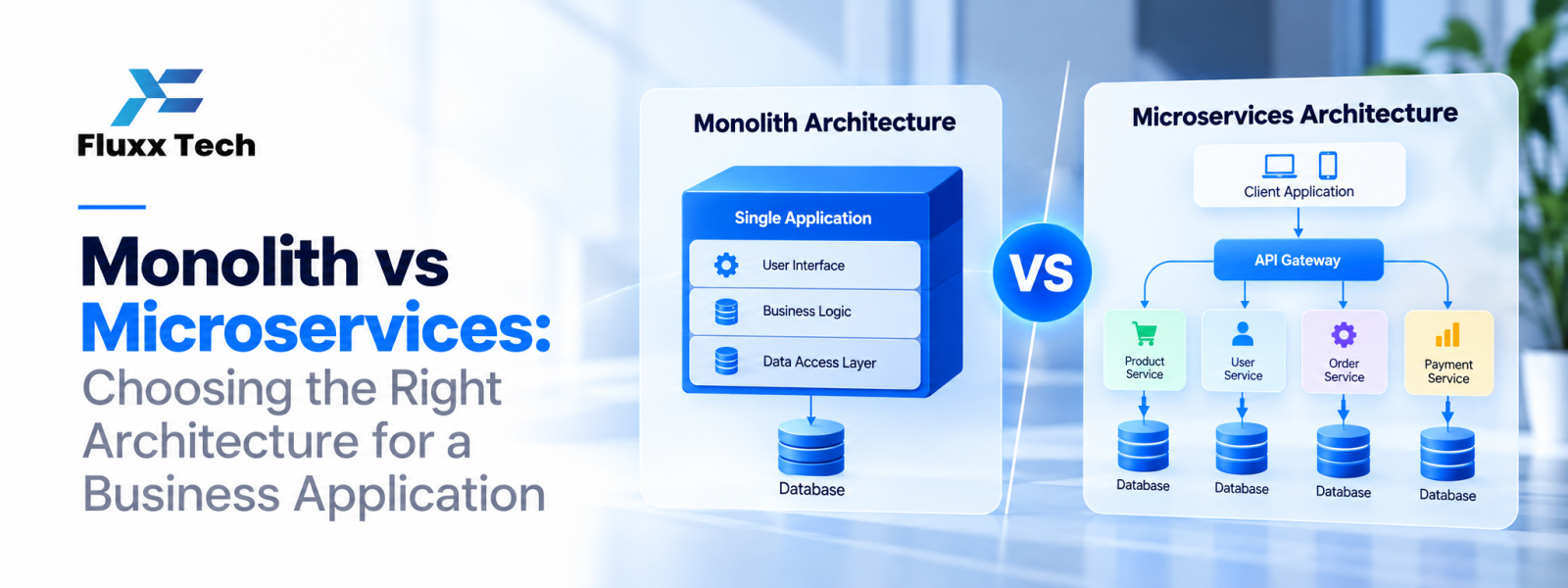
Architecture choices shape how a product is built, deployed and maintained. Microservices can offer independent deployment and team ownership, but they introduce network communication, distributed failure modes and operational overhead. A monolith can be simpler to operate when its boundaries are clear. The best choice depends on product needs, team structure and the organisation's ability to run the system reliably.
Understand the actual trade-off
A monolith packages capabilities into one deployable application. A modular monolith keeps them organised behind internal boundaries. Microservices split capabilities into independently deployed services. The key differences include deployment, data ownership, failure handling and team responsibilities—not just code size.
Start with business constraints
A small team building an early product may benefit from one deployable system. Multiple teams with different release schedules may benefit from independent services when they can own capabilities end to end. Consider compliance, availability, traffic and the cost of monitoring and incident response.
Define boundaries around business capabilities
If using services, split around cohesive responsibilities rather than individual tables or functions. Each service needs a clear purpose, interface and owner. Shared databases can create hidden coupling, while excessive service calls can make simple workflows slow and fragile.
Plan for distributed failure
Network calls time out, messages are delayed and dependencies become unavailable. Microservices require timeouts, retries, idempotency, observability and fallback behaviour. Data consistency may need asynchronous events or compensating actions. These problems are solvable, but they add operational work.
Evolve using evidence
A modular monolith can reveal which areas truly need independent scaling or deployment. Extract a service when there is a specific reason, such as team ownership or a distinct scaling profile. Measure release friction, incidents and operational cost before splitting.
Common Mistakes to Avoid
Do not choose microservices solely because a product may grow, and do not assume a monolith must become unmaintainable. Clear boundaries and disciplined engineering matter in either approach.
Frequently Asked Questions
Can a monolith scale?
Yes. Many monolithic applications can scale horizontally or vertically when designed and operated appropriately.
Can both approaches coexist?
Yes. A modular core can coexist with separate services where independent ownership, scaling or deployment provides enough value.
Conclusion
Choose architecture by matching complexity to business needs. A well-structured monolith is often a strong starting point; microservices become valuable when their benefits outweigh their operational cost.