Fluxx Tech
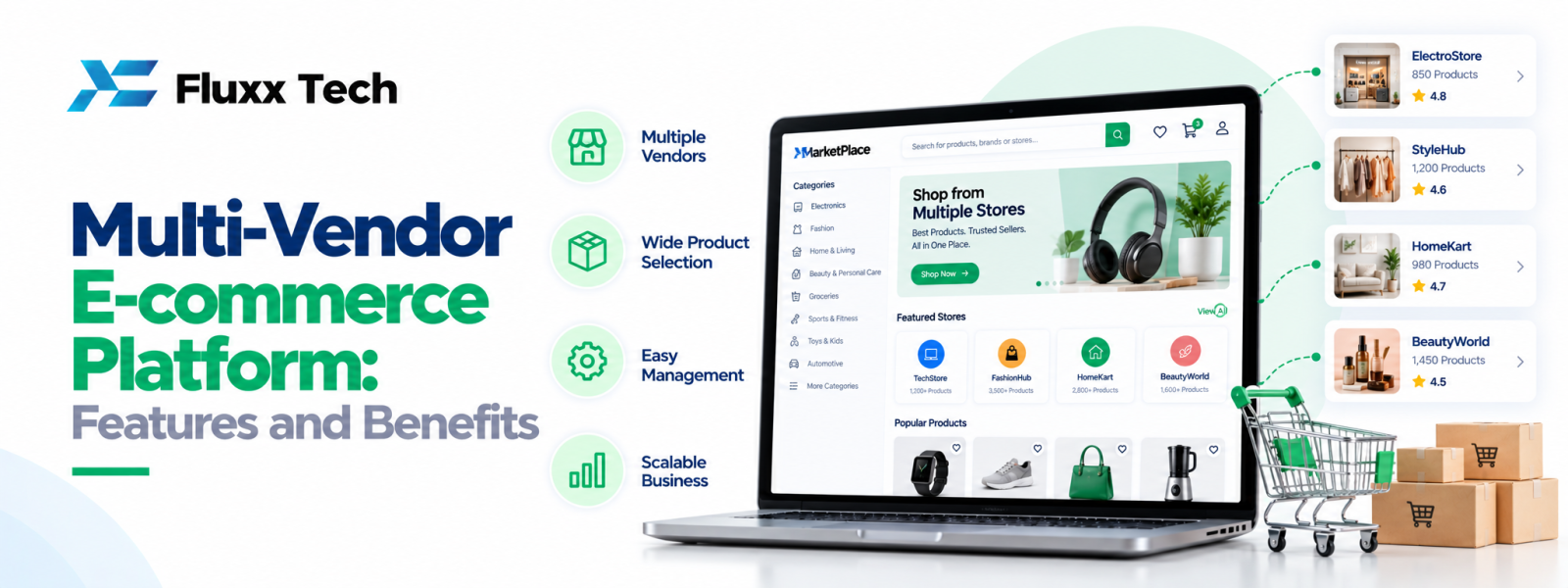
A multi vendor ecommerce platform lets several sellers list products and receive orders through one marketplace. It must coordinate customer shopping, seller access, product listings, order routing, commissions and support.
Define the business requirements
Choose the marketplace model first: what sellers can offer, who owns inventory, who sets prices and who handles customer complaints. These decisions determine the platform's permissions and workflows.
Build the core workflow
A vendor management system should support seller onboarding, profile review, access permissions and account status. Give vendors clear rules for product quality, images, pricing, stock updates and fulfilment.
Connect operations and technology
Support product categories, search, product variants and seller-level stock. Decide how baskets containing items from different sellers are split, priced and delivered, and explain this before checkout.
Make the customer experience reliable
Define order acceptance, packing, dispatch, cancellation, returns and dispute handling. Sellers and administrators need a shared view of each order and clear responsibility for exceptions.
Measure performance and improve
Document commissions, refunds, seller balances and settlement reports. Confirm the chosen payment provider supports the intended model and verify current provider terms before launch.
Plan a controlled launch
Launch with a focused seller group. Test listings, checkout, split orders, refunds and reports, then monitor active sellers, cancellations, fulfilment quality and customer satisfaction.
Conclusion
In conclusion, multi vendor ecommerce platform should support a clear business need and a dependable customer experience. Start with the essential workflow, test it with real users and verify that product, order and operational information stays accurate. Use customer feedback and measurable results to prioritise improvements, and add complexity only when the business is ready to maintain it.
Frequently Asked Questions
What should a business consider when choosing multi vendor ecommerce platform?
Start with the business model, customer needs, operational workflows, integrations, security and total ongoing cost. Test important scenarios before committing.
Should every business build all features at launch?
No. Begin with essential customer and admin workflows, then add features when feedback and operational data show a clear need.
What should be checked before publishing or launching?
Verify real platform capabilities, current provider or regulatory requirements, customer communication, payment states and support processes.