Fluxx Tech
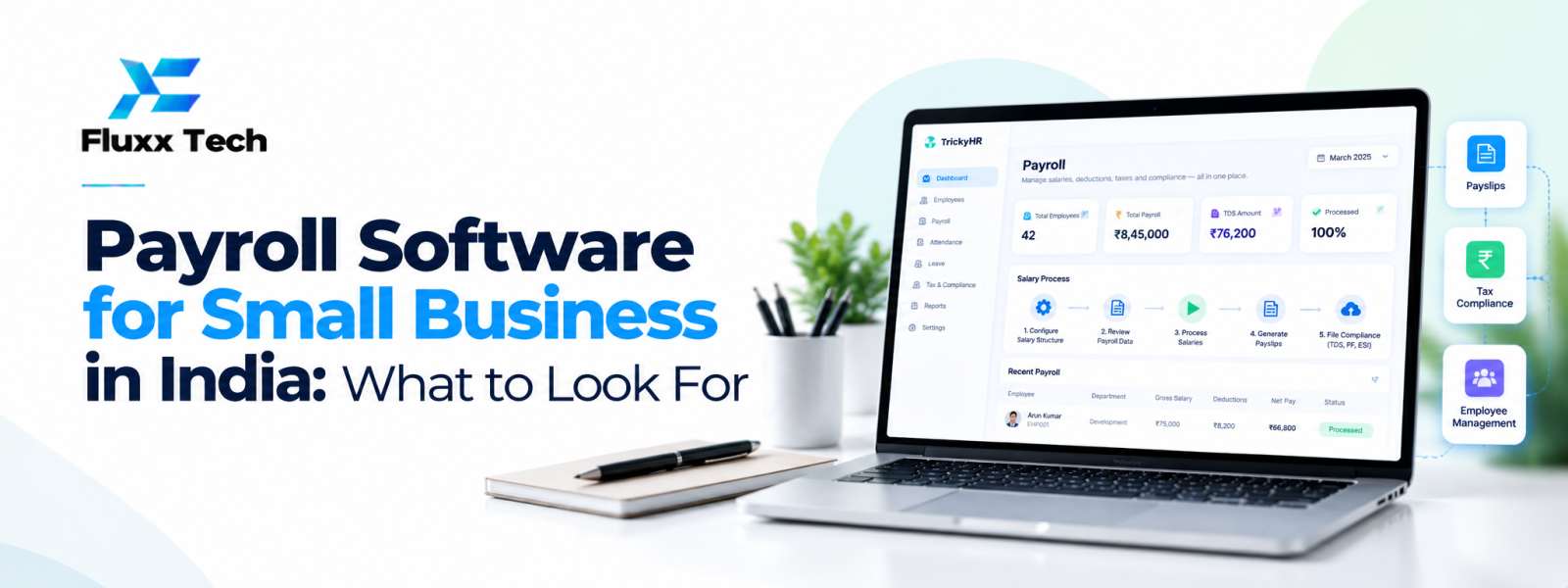
Payroll software for small business in India can help organise monthly salary calculations, payslips, payroll records and related approvals. It can reduce repetitive data entry, but software does not remove the employer’s responsibility to verify employee data, policies and applicable statutory requirements. Before selecting a tool, understand your salary structure and payroll workflow, then test whether the system handles real cases accurately.
What payroll software should handle
A payroll system typically uses employee details, salary components, attendance inputs, leave records and approved changes to prepare payroll outputs. Depending on the product, it may generate payslips, summaries, bank transfer files and accounting exports.
Define which activities the tool performs and which require review by HR, finance or an external professional. A system that calculates values is not automatically a guarantee that every input or compliance decision is correct.
Core features to evaluate
Salary structures: Support the earning and deduction components your organisation actually uses, with controlled changes and effective dates.
Attendance integration: Understand how unpaid leave, overtime, shifts and corrections are imported and approved.
Payslips and records: Check employee access, correction handling, retention and secure distribution.
Approvals and audit trail: Keep a record of who changed salary details, approved payroll and released final outputs.
Reports and exports: Verify summaries needed by finance, management and relevant advisers.
Access controls: Restrict access to salary and bank information and remove permissions when roles change.
Plan a reliable monthly payroll workflow
Set a clear cut-off date for attendance, leave, reimbursements and employee changes. Assign owners for each input and define who approves exceptions. Use a checklist so missing information is identified before calculations begin.
Run validation checks for new joiners, exits, salary revisions, unusual amounts and missing bank details. Review totals against the previous period and investigate significant changes rather than approving the output automatically.
After approval, distribute payslips securely, complete the payment process and retain the records required by your organisation and applicable rules.
Payroll automation without losing control
Payroll automation is most useful when it reduces repetitive steps while keeping approvals visible. Examples include importing approved attendance, applying standard salary components, generating draft payslips and preparing reports.
Avoid fully automatic release of payroll until the process has been tested thoroughly. Maintain a correction route, keep evidence of approvals and define how errors are resolved.
Indian compliance considerations
Payroll obligations can vary by employee category, establishment, location and applicable law. Requirements and thresholds can change, so verify current official guidance or consult a qualified payroll professional instead of relying on a software sales page or old checklist.
Ask the vendor how statutory settings are updated, what reports are supported and which decisions remain the employer’s responsibility. Confirm that your team understands the settings and reviews the outputs.
Implementation and vendor checklist
Prepare clean employee and salary data, test several representative payroll cases, reconcile outputs with your existing process and get authorised sign-off before going live. Keep a documented rollback or fallback plan for the first payroll cycle.
Compare licence fees, implementation charges, support, integrations, data export and the cost of adding employees. Ask how data is protected and how long records remain available if you end the contract.
Conclusion
In conclusion, the right HR and payroll process helps a business manage employee information more consistently, reduce avoidable manual work and give teams better visibility into day-to-day operations. Start by identifying the organisation’s actual requirements, checking compliance needs and involving the people who will use the system. Compare solutions carefully, test important workflows before rollout and review the results after implementation. A well-planned approach can make HR operations more reliable as the organisation grows.
Frequently Asked Questions
Can payroll software calculate salary automatically?
It can automate configured calculations using supplied data, but the employer must verify inputs, settings and applicable requirements.
Is payroll software the same as HRMS?
Payroll software focuses on salary workflows. An HRMS may also cover employee records, leave, attendance, onboarding and other HR activities.
What should we test before switching?
Test joiners, exits, salary revisions, leave, attendance exceptions, deductions, payslips, reports and approval permissions.