 Fluxx Tech
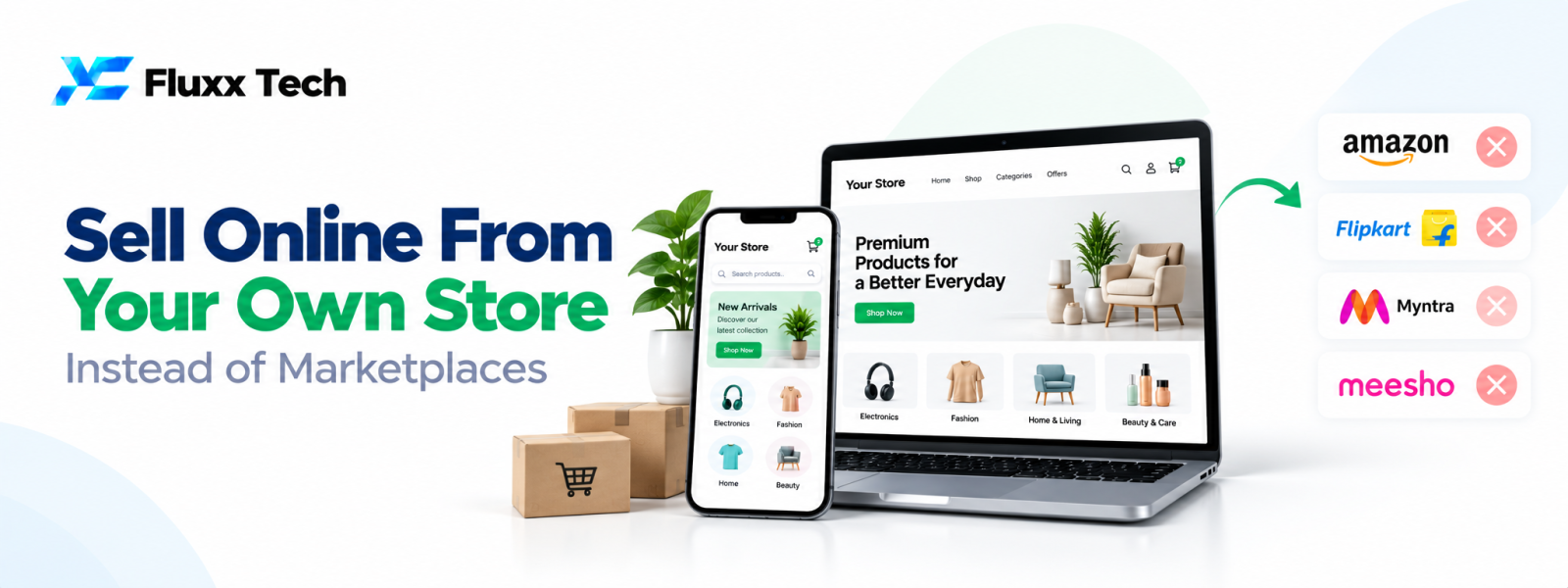
Choosing to sell online through your own store gives a business more control over branding, product presentation and the customer journey. Marketplaces can provide discovery and built-in buyer traffic, so the decision is not always an either-or choice. The important step is to understand the costs, customer access and operational responsibilities of each channel.
1. Understand marketplace advantages and limitations
Marketplaces may help sellers reach customers who are already searching for products. They can also provide established checkout experiences and logistics options, depending on the platform and seller programme.
At the same time, sellers must follow marketplace rules, compete beside similar products and account for commissions, fulfilment fees, advertising costs, penalties or other charges that may apply. Review the current fee schedule and seller terms before calculating margins.
2. Build a brand customers remember
An own ecommerce store gives you more flexibility over the visual identity, product storytelling, bundles, educational content and service experience. You can create landing pages for specific customer groups and communicate what makes your products different.
Brand control does not guarantee traffic. You must still invest in useful content, discoverability, customer service and a reliable fulfilment experience.
3. Build direct customer relationships responsibly
With a first-party store, you can design customer accounts, order history, support flows and opt-in marketing around your business needs. This can make it easier to encourage repeat purchases and provide relevant service.
Collect only the information you need, explain how it will be used and follow applicable privacy and marketing requirements. Do not assume that a customer who made a purchase has agreed to every kind of promotional message.
4. Calculate the real economics
Compare marketplace commissions and fulfilment charges with website costs such as platform fees, payment processing, hosting, shipping, returns, customer support and marketing. Include discounts and the cost of acquiring a customer.
Use contribution margin per order to understand what remains after variable costs. An own store may reduce some marketplace fees but can require more spending to attract visitors and earn trust.
5. Make the buying experience trustworthy
Provide accurate product information, clear pricing, shipping estimates, contact details, return policies and secure payment options. Show product images that reflect what customers will receive.
Make checkout easy on mobile devices and communicate order status promptly. A confusing website can lose sales even when the product and price are competitive.
6. Use marketing channels that fit your audience
Search-friendly category pages and helpful articles can attract customers who are researching a need. Social content can demonstrate product use, while paid campaigns can test demand for specific offers.
Use consent-based email or WhatsApp communication for order updates and marketing. Measure campaign performance with reliable tracking and avoid judging success only by clicks or impressions.
7. Consider a hybrid strategy
Many sellers use marketplaces for discovery while developing their own store for brand building and repeat business. The channels should complement each other rather than create inconsistent prices, stock or customer promises.
Check marketplace policies before directing marketplace customers elsewhere or using customer information for off-platform marketing. Rules differ, and non-compliance can put seller accounts at risk.
8. Plan a controlled transition
Start by moving a focused range of products to your own store. Set up analytics, test the order flow and make sure inventory and fulfilment can handle incoming demand.
Review conversion rate, repeat purchase rate, acquisition cost, average order value, returns and customer feedback. Expand only when the direct channel is producing sustainable results.
Conclusion
Building a successful solution around sell online own store requires a clear customer need, reliable operations and a buying experience people can trust. Start with the core workflow, test it with real users and improve it using customer feedback and measurable results. Avoid adding complexity before the essentials work consistently. With a practical roadmap and the right technology partner, your business can expand its digital channel at a pace its team can support.
Frequently Asked Questions
Is selling through your own store cheaper?
It depends on the full cost of operations and customer acquisition. Compare platform, payment, shipping, returns and marketing costs against marketplace fees.
Can I sell on marketplaces and my own website?
Often yes, but you must follow each marketplace's seller terms, pricing rules and customer-data policies.
How do I get traffic to my own store?
Build useful product pages, improve technical SEO, publish relevant content, maintain social channels and test targeted campaigns with conversion tracking.