Fluxx Tech
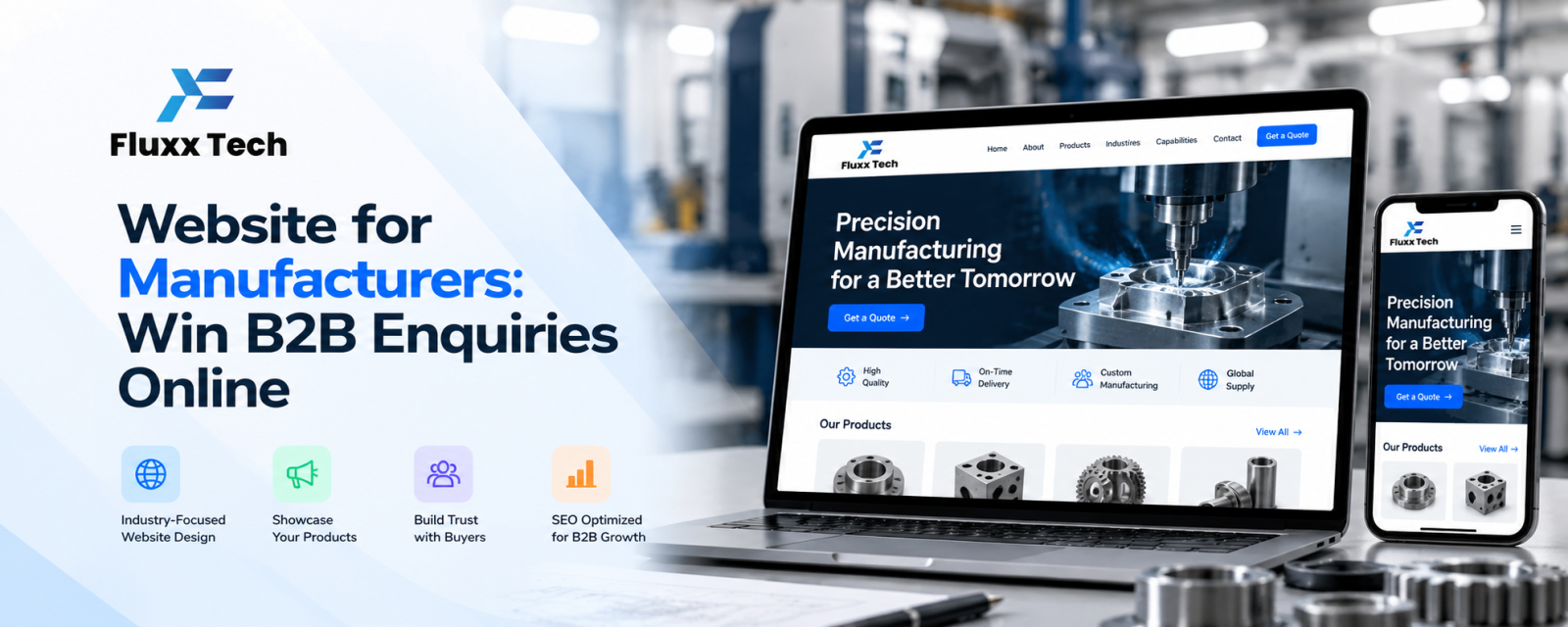
Coimbatore is known for pumps, motors, textiles, foundries, engineering components and machinery. Many of these manufacturers rely on dealers, trade fairs and word of mouth. Yet buyers, procurement teams and importers increasingly search Google, IndiaMART and LinkedIn before they shortlist suppliers.
A strong manufacturing website makes your business easy to find and easy to trust. Here is what it needs.
1. Clear product pages
One page per product or product family, with:
• Photos and diagrams
• Specifications, models and technical data tables
• Applications and industries served
• Downloadable datasheets and catalogues (PDF)
• A “Request a quote” button
2. Capabilities and infrastructure
B2B buyers want to know if you can deliver. Show:
• Manufacturing processes and machinery
• Capacity and lead times, where you can share them
• Quality control and testing facilities
• Photos and video of the shop floor
3. Certifications and compliance
ISO certifications, product certifications, export registrations and quality standards build trust quickly. Show them clearly with certificate images where appropriate.
4. Industries and clients
Pages for the industries you serve, such as agriculture, automotive, textiles or construction, help buyers find you. Show client logos and case studies only with permission.
5. RFQ (request for quote) forms
Make it easy to send a detailed enquiry:
• Product, quantity and specifications
• File upload for drawings
• Delivery location and timeline
• Company and contact details
Route RFQs to the right sales person automatically, and reply quickly.
6. Export-ready features
If you export, consider:
• English content written for international buyers
• Additional languages for key markets
• Export capabilities, ports and Incoterms you work with
• Time-zone friendly contact options
7. SEO for B2B searches
B2B buyers search specific terms, such as “submersible pump manufacturer in Coimbatore” or “precision CNC components supplier India”. Target these with:
• Product and industry pages with specific keywords
• Technical blog posts and application guides
• Listings on IndiaMART, TradeIndia and industry directories
• A LinkedIn company page that links to the site
8. Dealer and distributor support
A dealer locator, a dealer enquiry form, and a dealer login for price lists and orders can save hours of phone calls.
What does a manufacturer website cost?
A manufacturing website with product catalogue, datasheets, RFQ forms and SEO setup typically costs ₹60,000 to ₹2,50,000, depending on product range and features. A dealer portal costs more. Fluxx Tech pricing: [add your price].
Frequently asked questions
Do B2B buyers really use websites? Yes. Even when deals close offline, buyers check websites to shortlist and verify suppliers.
Should I show prices? Most B2B manufacturers don’t, because prices depend on volume and specifications. Make the quote request easy instead.
Is IndiaMART enough? It brings enquiries, but competitors sit on the same page. Your own website builds trust and brings direct enquiries.