 Fluxx Tech
Reduce avoidable SEO and usability errors during a website migration. This guide explains the key decisions, practical steps and common risks so businesses can make informed choices.
Understand the Fundamentals
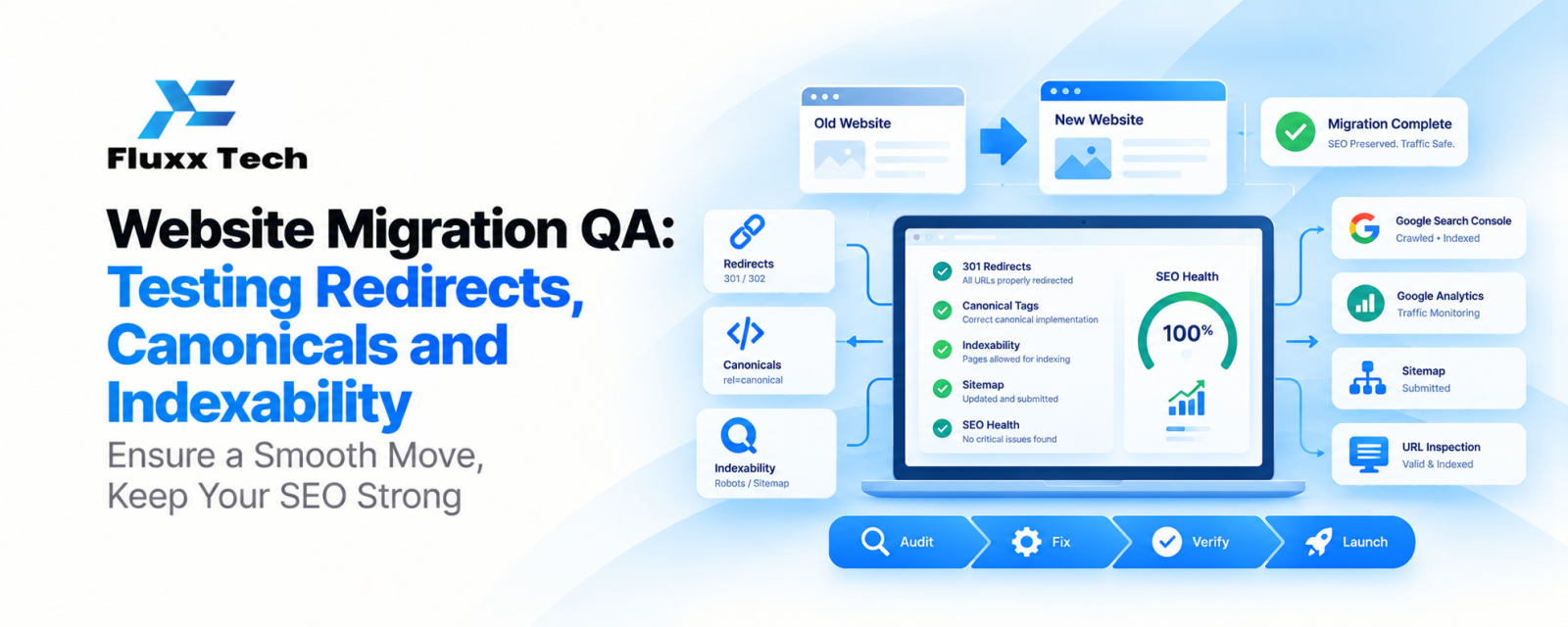
Inventory important URLs and map old pages to relevant destinations. Test redirects for chains, loops and irrelevant targets. Check canonical tags, status codes, robots rules, sitemaps and internal links. Validate forms, checkout and analytics. After launch, monitor Search Console, server errors, key landing pages and conversions; rankings cannot be guaranteed to remain unchanged.
Plan Before Implementation
Begin by defining the business outcome, the people involved and the constraints that matter. Document the current process, systems and known gaps before selecting tools or making changes. Confirm assumptions with the people who will use or maintain the solution.
Implementation Steps
Create a small, testable plan; assign an owner; document requirements; and validate the approach in a controlled environment. Test normal cases and failure cases, check accessibility and security where relevant, and provide clear guidance for users. Expand gradually based on evidence.
Common Mistakes to Avoid
Avoid adopting a tool without a defined purpose, relying on unverified assumptions, ignoring edge cases or measuring activity without checking outcomes. Keep documentation current, protect sensitive information and avoid promises that cannot be guaranteed.
Measurement and Continuous Improvement
Choose a baseline and a small set of meaningful metrics before launch. Review errors, completion rates, customer feedback and operational impact. Record changes and revisit the process when requirements, platforms or customer behaviour change.
Frequently Asked Questions
What is the first step for website migration testing?
Start by defining the business goal, audience and measurable outcome. Then document requirements and test a focused approach.
Can results be guaranteed?
No. Outcomes depend on implementation quality, competition, data, platform changes and business context. Use evidence and regular review.
How often should the approach be reviewed?
Review after major changes and on a cadence appropriate to the system or campaign. Use real performance data to decide when to adjust.
Conclusion
Website Migration QA: Testing Redirects, Canonicals and Indexability should be approached with a clear objective, a documented process and regular review. Businesses should begin with user needs, validate decisions with evidence and improve in manageable steps. Fluxx Tech can help plan practical digital solutions aligned with business requirements.