Fluxx Tech
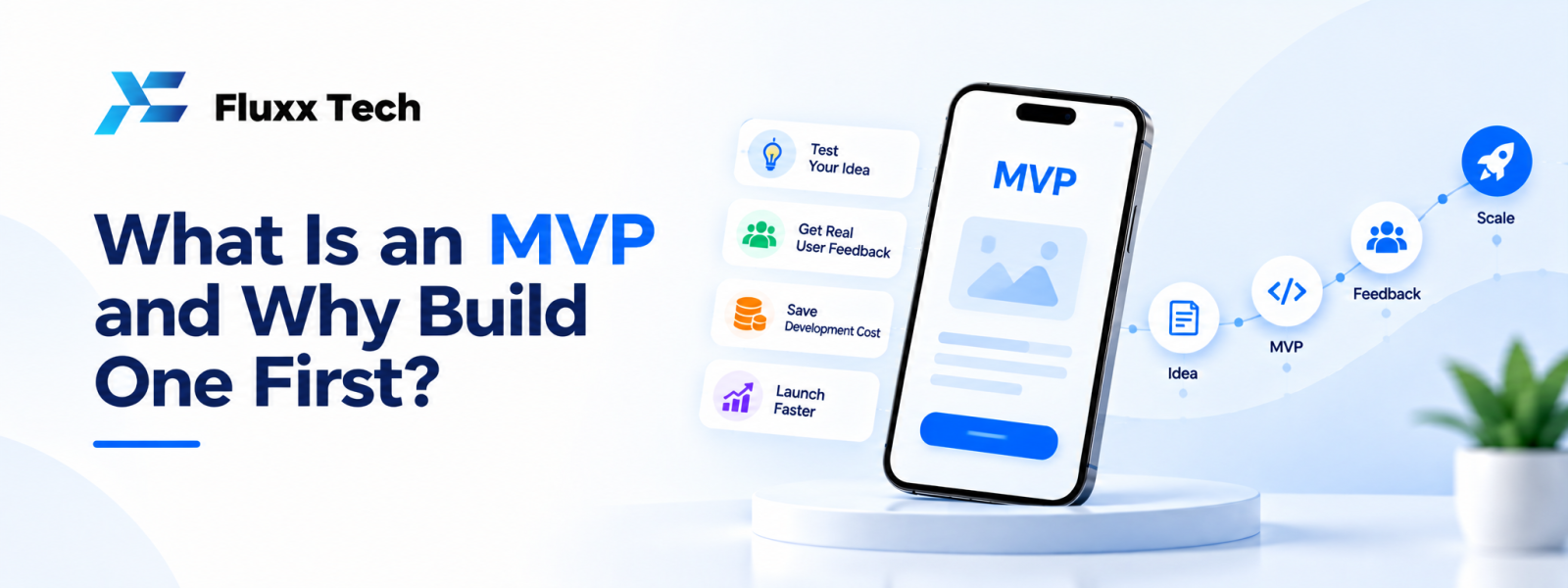
A startup idea can look promising on paper but still need validation with real users. MVP app development helps a team build a focused first version, test key assumptions and learn before investing in a larger product. MVP stands for minimum viable product. It is not an excuse to release unreliable software; it is a way to limit the initial scope while delivering enough value to learn from actual use. For Indian startups and small businesses, this approach can make product decisions more evidence-based.
What is a minimum viable product?
The basic idea
A minimum viable product includes the smallest set of features needed to address a core user problem and gather meaningful feedback. It should be usable and appropriately tested for its intended audience.
What an MVP is not
It is not merely a clickable design, an unfinished app or a product with essential security and quality removed. A prototype may test a concept, while an MVP lets users complete a real, limited workflow.
Example
A local service startup may initially offer customer registration, booking and appointment reminders. Reviews, loyalty rewards and advanced reporting can be considered after the core booking journey is validated.
Why build an MVP first?
Validate the problem
User feedback can reveal whether the problem is important enough for people to adopt a new solution. This is more useful than relying only on internal opinions.
Test assumptions
An MVP can test assumptions about pricing, workflows, user preferences or demand. Define the question before launch so feedback is interpreted consistently.
Prioritise investment
A focused first release limits the number of features built before there is evidence they are needed. It can help the team decide where further investment makes sense.
Learn from real use
Users may behave differently from what a team expects. Observe where they complete tasks, ask for help or abandon a workflow.
How to plan MVP app development
Step 1: Define the user and problem
Describe the target user, the situation they face and the outcome they need. Avoid defining the product only as a list of features.
Step 2: Map the core journey
Write the steps users must complete to receive the main value. Include important error states and support needs.
Step 3: Prioritise features
Classify features as essential for launch, useful later or experimental. Keep the first scope focused on the core journey.
Step 4: Set learning goals
Decide what evidence would support or challenge the idea. Measures may include task completion, repeat use, feedback or successful transactions, depending on the product.
Step 5: Build and test
Design the interface, implement the required functionality and test the main scenarios. Make sure the MVP is suitable for the people who will use it.
Step 6: Release to a defined audience
A controlled pilot can make it easier to collect feedback and address issues before a wider launch. Explain what the product currently supports.
Step 7: Review and prioritise
Combine user feedback with observed behaviour. Fix important problems before adding features that do not support the core goal.
What should be included in an MVP?
Core functionality
Include only the features needed for the user to complete the main task. For a booking app, that may mean availability, booking confirmation and a way to manage appointments.
Essential operational tools
The business may need an admin view to handle bookings, users or support requests. Customer-facing functionality cannot operate reliably if staff have no way to manage it.
Appropriate security
Protect accounts and business information according to the app's risk and data needs. Limiting scope should not mean ignoring access controls or safe data handling.
Basic measurement
Collect enough information to understand whether the core journey works. Be transparent about data collection and avoid gathering unnecessary personal information.
MVP mistakes and how to avoid them
Confusing minimal with poor quality
A small feature set can still have a clear interface and reliable core workflows. Test what is included.
Adding every stakeholder request
New ideas should be evaluated against the learning goals and core problem. Keep a backlog for later releases.
Launching without a feedback plan
Decide how users can report issues and how the team will review feedback. Otherwise, the release may generate little useful learning.
Ignoring future architecture
Do not overbuild for hypothetical needs, but avoid choices that make foreseeable improvements unnecessarily difficult. Discuss likely next steps with the technical team.
What happens after the MVP?
Improve the core experience
Resolve friction in the main user journey before expanding the product.
Add evidence-based features
Prioritise requests that support user needs and business goals. Not every suggestion needs to become a feature.
Review technical limits
As usage grows, evaluate performance, reliability, integrations and support needs. Improvements should respond to real requirements.
Plan the next release
Use feedback and operational experience to create a roadmap with clear priorities and acceptance criteria.
Frequently Asked Questions
What does MVP stand for?
MVP means minimum viable product: a focused version that delivers core value and helps a team learn from users.
Is an MVP suitable for every startup?
It is useful for many products with uncertain assumptions, but the appropriate validation method depends on the risk, industry and user needs.
Should an MVP include all planned features?
No. It should include the features needed to test the core problem and deliver the intended initial value.
Is an MVP the same as a prototype?
Not necessarily. A prototype may demonstrate or test a concept, while an MVP supports a limited real user workflow.
How do I know when to add features?
Use user feedback, observed behaviour, business priorities and technical evidence to decide which improvements matter most.
Conclusion
MVP app development gives startups a structured way to test assumptions, learn from users and prioritise investment. Define the core problem, keep the first scope focused, maintain essential quality and use evidence to guide the next release.