Fluxx Tech
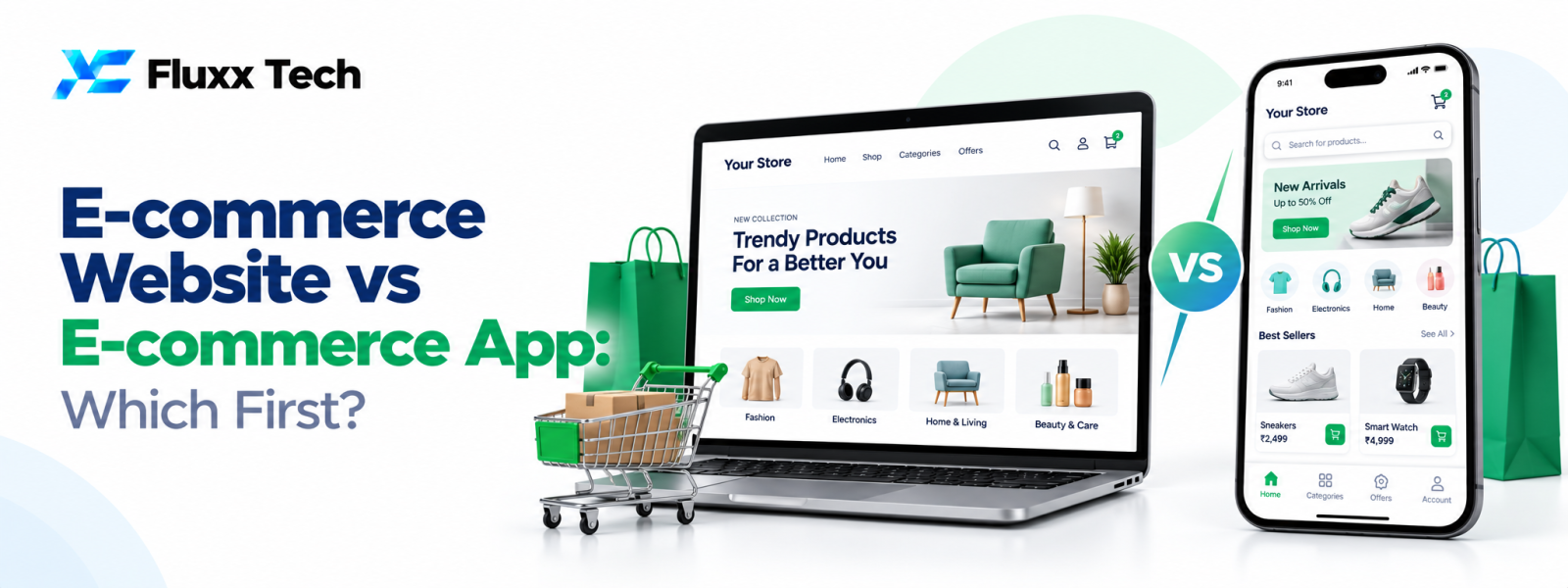
When comparing ecommerce website vs app options, the right decision depends on how customers discover, purchase and return to your business. A website is easy to share and access through a browser, while a mobile app can offer deeper device integration and a more persistent experience for repeat customers. The best first step is the one that supports your current customer journey and budget.
1. What an e-commerce website does well
A website can be opened from a search result, social post, advertisement, email or shared link without asking the customer to install anything. This makes it useful for discovery, product research and reaching first-time buyers.
Well-structured pages can support search visibility, product education and content marketing. A responsive website can serve desktop and mobile users from one core experience, although performance and mobile usability still require careful testing.
2. Where a mobile app can help
An app can be useful when customers buy frequently, need saved preferences, use loyalty features or benefit from app-specific workflows. Depending on platform permissions and implementation, apps may support push notifications, biometric sign-in or device capabilities.
However, installing an app creates an extra step. Customers may not want an app for an occasional purchase, and an app does not automatically generate loyalty or sales. The business still needs a useful reason for customers to return.
3. Compare the total cost
Website cost depends on design, catalogue size, integrations, checkout, content and maintenance. App cost can include separate iOS and Android development or a cross-platform approach, app-store release work, device testing and ongoing updates.
Compare total ownership cost rather than the first quote alone. Include hosting, analytics, support, security updates, third-party services and the work required to maintain consistent product and order data.
4. Compare customer acquisition
A website can be promoted through search engines, links, social channels and paid advertising. It is often easier to send a potential customer directly to a relevant product or campaign landing page.
An app may support retention once customers have installed it, but getting downloads can require additional marketing. Measure actual active users and repeat purchases rather than treating downloads as the main success metric.
5. Consider your product and buying frequency
For high-consideration products, customers may need detailed specifications, comparison content and support before buying. A website can present this information and attract people who are still researching.
For frequently purchased products, an app may be useful for saved baskets, quick reorders, subscriptions or loyalty benefits. The decision should reflect real customer behaviour, not only competitor features.
6. Start with a mobile-friendly website
For many new businesses, a fast and accessible website is a practical foundation. Prioritise clear product pages, transparent shipping information, simple checkout, secure payment integration and analytics.
Make sure the backend can support future growth. A well-planned product catalogue, customer records and order-management workflow can reduce duplication if an app is added later.
7. Use data to decide when to build an app
Review repeat-purchase frequency, customer requests, mobile traffic, checkout conversion and the cost of encouraging customers to return. Ask whether app-specific functions would solve a measurable problem.
If the business already has a large base of repeat customers, test an app concept with a limited set of features. If discovery and conversion are still weak, improve the website and fulfilment process first.
8. A practical decision framework
Choose a website first when your priority is reach, search visibility, campaign landing pages or validating demand. Consider an app when repeat usage is strong and the customer experience benefits from persistent features.
Some businesses will eventually need both. Build them in stages, reuse dependable backend services where appropriate and keep the experience consistent across channels.
Conclusion
Building a successful solution around ecommerce website vs app requires a clear customer need, reliable operations and a buying experience people can trust. Start with the core workflow, test it with real users and improve it using customer feedback and measurable results. Avoid adding complexity before the essentials work consistently. With a practical roadmap and the right technology partner, your business can expand its digital channel at a pace its team can support.
Frequently Asked Questions
Is an e-commerce app better than a website?
Neither is universally better. A website usually supports discovery and easy access, while an app can be valuable for frequent customers and specialised repeat-use features.
Can I turn my website into an app later?
Often, yes, but the effort depends on the platform, architecture and required app features. Plan product, customer and order data carefully from the start.
Should a small business launch both at once?
Launching both can increase cost and complexity. Validate demand and stabilise operations before investing in multiple customer-facing channels.