Fluxx Tech
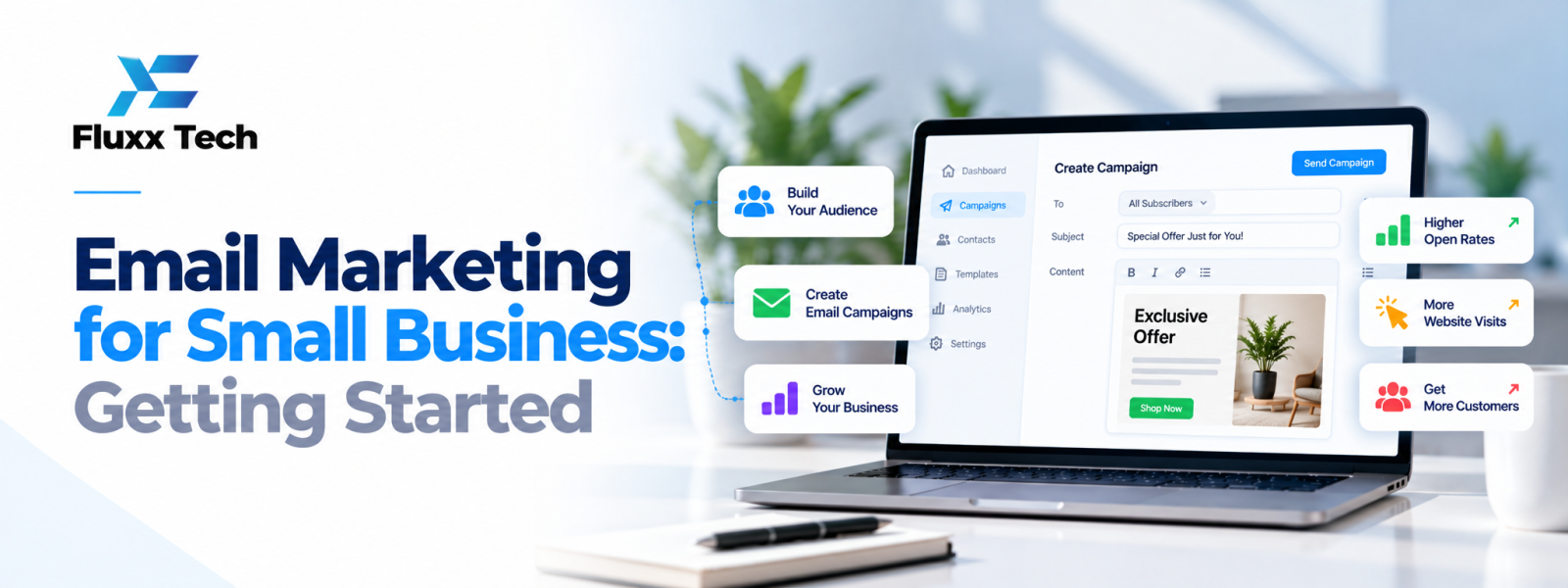
Email marketing for small business gives companies a way to communicate with people who have chosen to receive updates. It can support product education, announcements, customer retention and follow-up. A successful programme is not about sending as many emails as possible; it is about sending relevant messages to the right audience with clear permission and an easy way to unsubscribe.
Define the purpose of each email
Decide whether the email will educate, announce an update, invite a response or support an existing customer relationship. One message should have a clear purpose. Avoid mixing too many offers and topics into one email, because readers may not understand what action matters.
Build a permission-based list
Collect email addresses through appropriate forms, registrations or customer interactions, and explain what people are signing up for. Follow applicable privacy and marketing requirements. Do not buy email lists or add people without a valid basis. Keep records of consent and provide an easy unsubscribe method.
Choose a suitable email platform
Compare contact limits, templates, segmentation, automation, reporting, integration and support. Check how the provider handles data, access controls, exports and unsubscribes. Choose a tool that fits the business’s actual needs rather than paying for advanced features before the team is ready.
Write useful subject lines and content
Make the subject line clear and relevant to the message. Use a recognisable sender name, short paragraphs and a readable layout. Explain the benefit to the reader and include one main call to action. Avoid deceptive subject lines or exaggerated claims. Test the email on mobile devices before sending.
Segment the audience thoughtfully
People may have different interests, purchase histories or stages in the customer journey. Segmentation can make messages more relevant, but use only information the business is entitled to use and avoid sensitive assumptions. Keep segments manageable and review whether they improve engagement or outcomes.
Plan a sustainable sending schedule
Send often enough to remain useful but not so often that messages become intrusive. Set expectations when people subscribe. A welcome email, useful periodic update and relevant follow-up may be a sensible starting point for some businesses. Let subscriber preferences and response data guide changes.
Measure deliverability and results
Review delivery, bounce, unsubscribe, click and conversion data. Open rates can be affected by privacy features and should not be treated as a perfect measure. Track the action that matters to the campaign, such as a booking or purchase, where possible. Investigate sudden changes and keep the list clean.
Protect trust and improve over time
Use authentication and follow the email provider’s sending guidance. Limit access to subscriber data and honour unsubscribe requests promptly. Test one change at a time—such as subject line, content or call to action—and compare results across similar audiences. Good email marketing respects the reader’s attention.
Conclusion
A useful digital marketing plan is built around customer needs, clear goals and consistent measurement. Start with the steps that matter most to your business, test changes carefully and improve using real results. Avoid guarantees and make sure the website, follow-up process and customer experience support the campaign.
Frequently Asked Questions
Q: Can a small business start email marketing with a small list?
A: Yes. A small, permission-based list can be useful when messages are relevant and expectations are clear.
Q: Is it okay to buy an email list?
A: Buying lists can create privacy, consent and deliverability problems. Build a list through appropriate, transparent methods.
Q: How often should I send emails?
A: Set a frequency you can sustain and explain it to subscribers. Use feedback and engagement data to adjust.
Q: What should I measure besides open rate?
A: Review clicks, conversions, bounces, unsubscribes and the business outcome tied to the campaign.