 Fluxx Tech
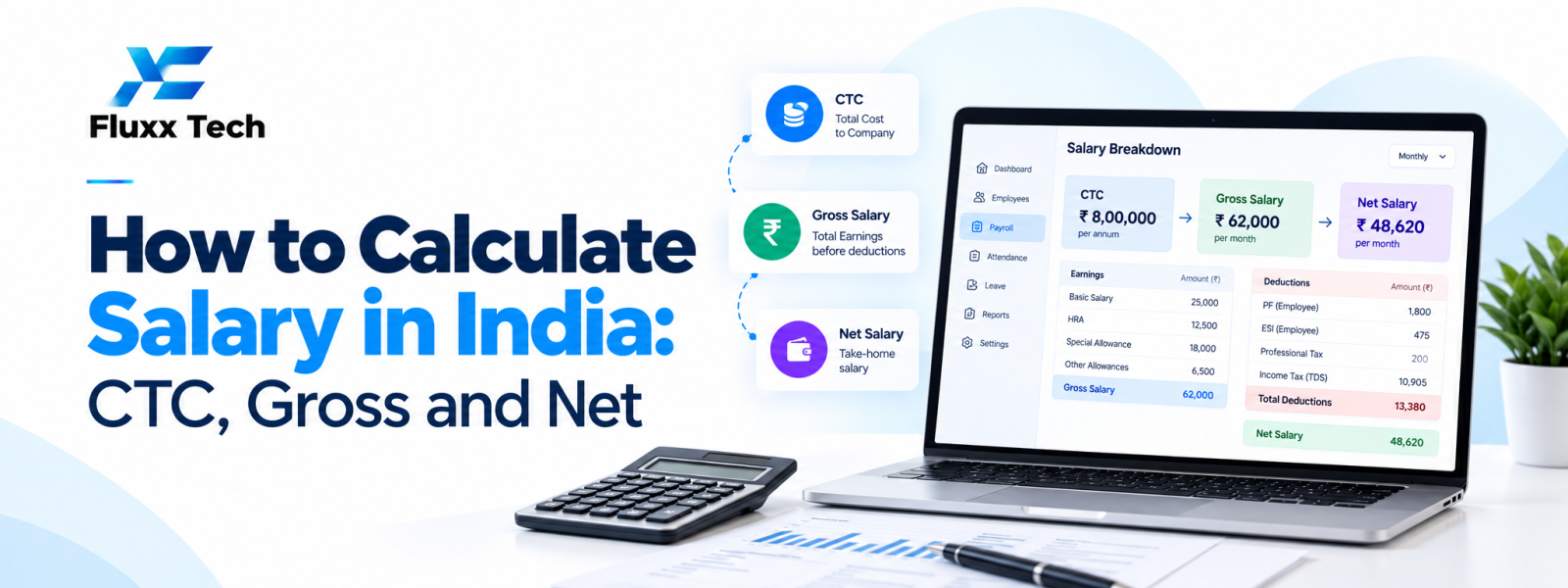
To understand how to calculate salary in India, separate three common terms: Cost to Company (CTC), gross salary and net or take-home salary. They are related but not identical. CTC represents the employer's overall stated cost under the organisation's salary structure, gross salary generally refers to earnings before employee-side deductions, and net salary is the amount payable after applicable deductions. Exact components vary by employer and current rules, so always use the actual salary breakup and payslip.
Understand CTC, gross and net salary
CTC may include fixed pay, variable pay, employer contributions, insurance or other benefits depending on the employer's definition. Some items may not be paid directly to the employee each month.
Gross salary generally totals the earnings payable before deductions such as applicable employee contributions, tax withholding or other authorised deductions. Net salary is the final take-home amount after the deductions shown in the payroll calculation.
Because employers structure packages differently, two offers with the same CTC can produce different monthly take-home pay. Compare the components rather than relying only on the headline figure.
Read the salary structure
Review basic pay, allowances, variable components, reimbursements and employer-provided benefits. Confirm which components are fixed, which depend on performance or attendance and which are paid periodically rather than monthly.
Check whether employer contributions or insurance are included in the stated CTC. Understand the conditions attached to bonuses and reimbursements before treating them as guaranteed take-home income.
A simplified calculation approach
Start with the salary components payable for the period to arrive at gross earnings under your employer's definition. Subtract applicable employee deductions and tax withholding to estimate net pay. Separately review employer-side costs included in CTC but not paid as cash salary.
For example, use a hypothetical payslip with clearly labelled amounts and verify each component against the actual payroll rules. Do not use a generic percentage as a substitute for calculating the deductions that apply to a specific employee.
What affects take-home pay?
Salary structure, attendance, unpaid leave, variable pay, applicable contributions, tax declarations, benefits and authorised deductions can all affect the final amount. Changes in law or employer policy may also affect payroll settings.
For an accurate result, use the current salary breakup, relevant official rules and the employer's payroll statement. A calculator can provide an estimate, but it cannot validate incorrect inputs.
How to compare job offers
Compare fixed annual pay, variable compensation, employer benefits, expected monthly take-home, probation conditions, bonus criteria and deductions. Ask for a written breakup if the offer only lists CTC.
Use the same assumptions when comparing offers and distinguish guaranteed cash from conditional benefits. For tax or statutory questions, consult current official guidance or a qualified professional.
Conclusion
In conclusion, the right HR and payroll process helps a business manage employee information more consistently, reduce avoidable manual work and give teams better visibility into day-to-day operations. Start by identifying the organisation’s actual requirements, checking compliance needs and involving the people who will use the system. Compare solutions carefully, test important workflows before rollout and review the results after implementation. A well-planned approach can make HR operations more reliable as the organisation grows.
Frequently Asked Questions
Is CTC the same as take-home salary?
No. CTC may include employer costs and benefits that are not paid as monthly cash salary.
Why is gross salary higher than net salary?
Net pay reflects applicable deductions and withholding from gross earnings.
Can an online salary calculator give an exact result?
It can estimate based on the inputs and rules it uses. Verify the actual salary breakup and current applicable rules for an accurate payroll result.