Fluxx Tech
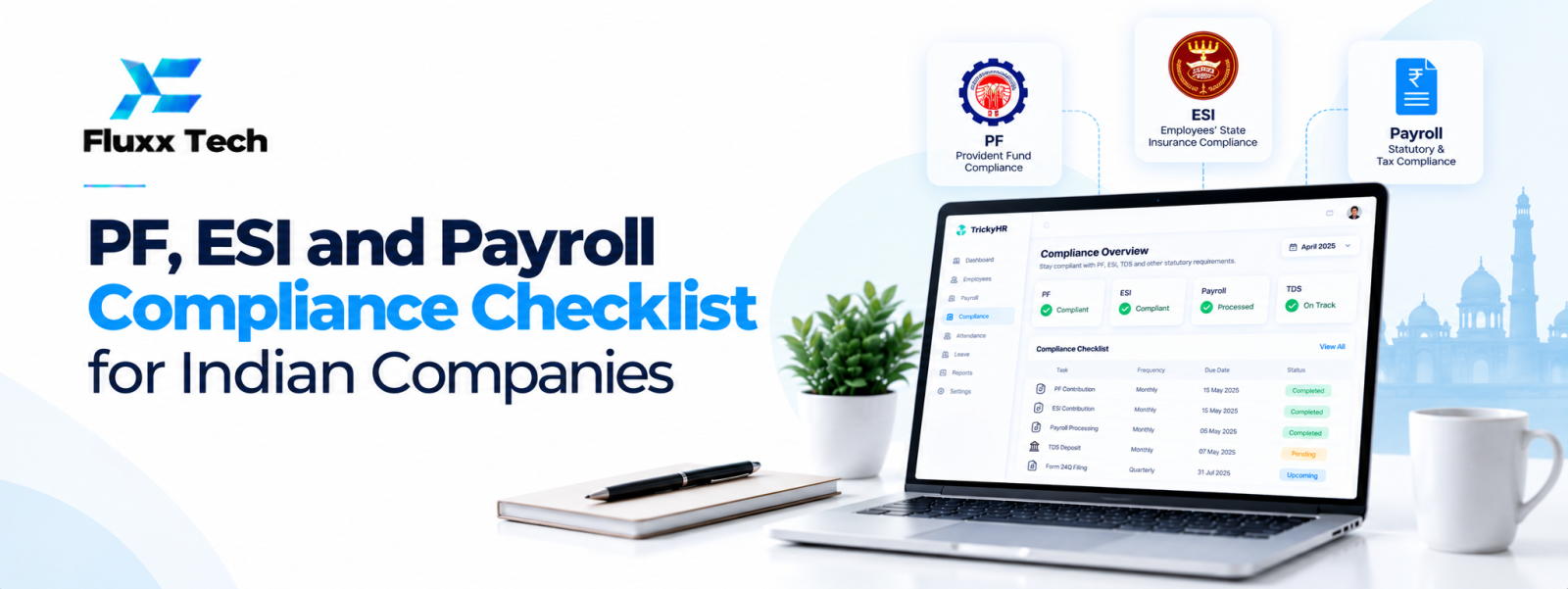
A payroll compliance India checklist helps HR and finance teams organise recurring reviews of employee records, payroll inputs, statutory deductions, filings and payment evidence. The exact obligations depend on the establishment, workforce, wages, location and current rules. This article is an operational planning aid, not legal or tax advice: verify current requirements with official sources or a qualified professional before acting on a compliance decision.
Build a reliable compliance calendar
Create a calendar of recurring payroll activities, responsible owners, review dates and required evidence. Include internal cut-offs for employee data, attendance, payroll approval and document checks so statutory tasks are not left until the last minute.
Record which rules apply to the organisation and how applicability is reviewed when headcount, wages, location or business structure changes. Do not assume every obligation applies identically to every employer.
Maintain accurate employee records
Keep authorised employee details, joining and exit dates, wage components and relevant identifiers accurate and access-controlled. Use a documented process for corrections and maintain supporting records where required.
Reconcile changes such as new joiners, exits, salary revisions and changes in employment category before processing payroll. Assign a clear owner to resolve missing or conflicting information.
Review PF-related processes
Confirm the organisation's applicability, employee coverage, contribution treatment, registration and reporting responsibilities with current official guidance or a qualified adviser. Review whether payroll data and submitted records match the approved employee and wage information.
Maintain evidence of calculations, approvals, payments and required submissions. Where exceptions arise, record the question, decision, responsible person and supporting advice rather than relying on an undocumented assumption.
Review ESI-related processes
Check applicability and coverage against current official rules and the circumstances of the establishment and employees. Validate the data used for contributions, keep records of relevant changes and confirm that reporting and payment tasks have clear owners.
Thresholds, coverage and procedures can change. Do not use an old spreadsheet or software default as the sole authority for a current compliance decision.
Payroll controls and reconciliations
Compare payroll totals with approved salary changes, attendance inputs, deductions and payment records. Investigate unusual differences from the prior period and require authorised review before final release.
Restrict who can edit salary components and statutory settings. Maintain an audit trail for changes, and separate preparation from approval where practical. Reconcile payment confirmations and retain records according to applicable retention requirements.
Use software without assuming it guarantees compliance
Payroll software can support reminders, calculations, reports and recordkeeping, but its output depends on correct configuration and current data. Confirm how updates are delivered, who reviews settings and what happens when a rule changes.
Keep a process for validating reports and checking official updates. If an issue is uncertain or high-risk, consult a qualified professional rather than relying solely on a vendor's support response.
A practical monthly review checklist
Confirm employee changes and attendance inputs; review salary components and authorised deductions; validate relevant PF and ESI settings; reconcile payroll totals; obtain approval; verify payment and submission evidence; secure records; and document unresolved issues with an owner and due date.
Review the checklist periodically with the responsible adviser so it reflects current requirements and the organisation's actual obligations.
Conclusion
In conclusion, the right HR and payroll process helps a business manage employee information more consistently, reduce avoidable manual work and give teams better visibility into day-to-day operations. Start by identifying the organisation’s actual requirements, checking compliance needs and involving the people who will use the system. Compare solutions carefully, test important workflows before rollout and review the results after implementation. A well-planned approach can make HR operations more reliable as the organisation grows.
Frequently Asked Questions
Does every Indian company have the same PF and ESI obligations?
No. Applicability depends on current law and the circumstances of the establishment and employees. Verify the specific situation with official guidance or a qualified professional.
Can payroll software guarantee compliance?
No. Software can assist with workflows and calculations, but employers must verify data, configuration and current obligations.
Where should current requirements be checked?
Use relevant official government portals and qualified professional advice. Keep a record of the guidance used for important decisions.