Fluxx Tech
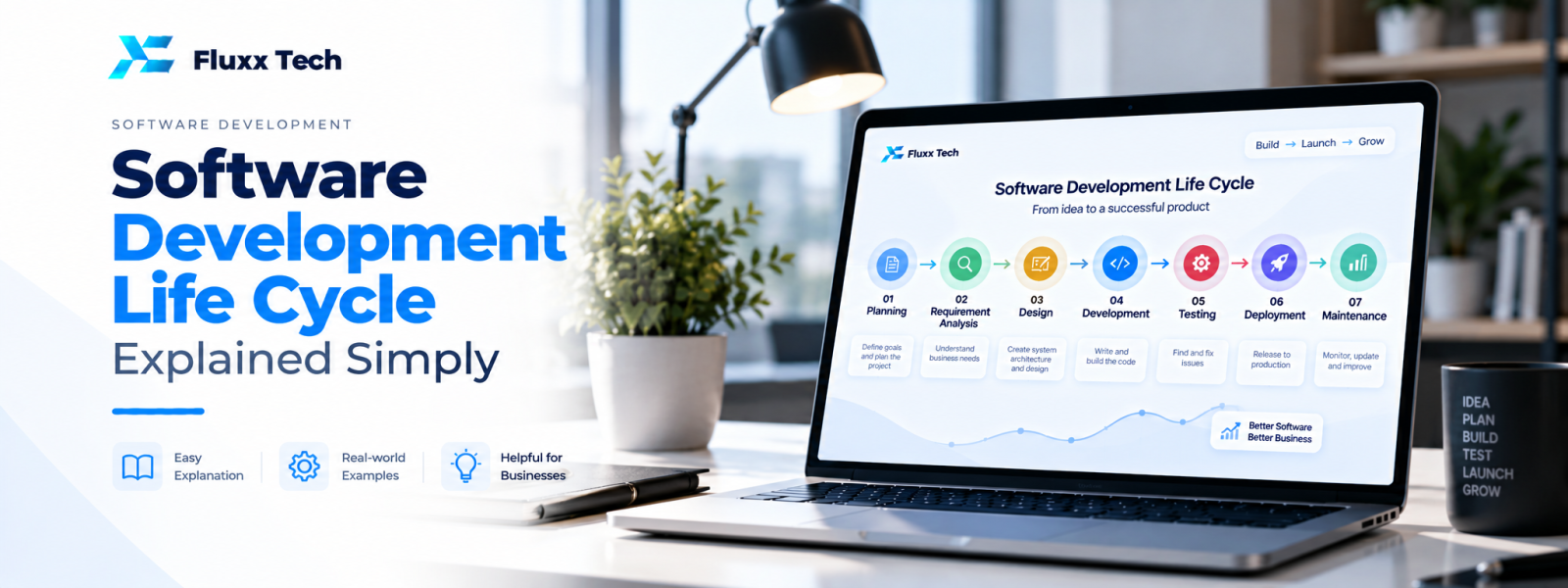
Software projects are easier to manage when everyone understands how an idea becomes a working product. The software development life cycle is a structured way to plan, build, test, release and maintain software. It helps business owners understand what decisions are needed at each stage, what deliverables to expect and why testing and maintenance should be part of the plan from the beginning.
What is the software development life cycle?
The Software Development Life Cycle (SDLC) describes the stages a team follows to deliver and maintain software. The exact process varies by project and organisation, but it commonly includes planning, requirements, design, development, testing, deployment and maintenance.
The SDLC is not only a technical checklist. It gives business stakeholders opportunities to confirm priorities, review progress, make decisions and check whether the solution meets the intended need.
Phase 1: Planning and feasibility
The team identifies the business problem, intended users, expected outcomes, constraints and possible solution approaches. It considers budget, timeline, available skills, risks and dependencies. The result should be a clear view of why the project matters and whether it is practical to proceed.
Business owners can help by explaining the current process, describing the cost of the problem and identifying the people who will make decisions. Avoid starting with a feature list before agreeing on the problem.
Phase 2: Requirements gathering
Requirements describe what the software should do and the conditions it must meet. Functional requirements cover actions such as creating an order or approving a request. Non-functional requirements cover qualities such as performance, security, accessibility, reliability and usability.
Requirements may include user roles, reports, integrations, data migration and acceptance criteria. Use examples and workflows to remove ambiguity. If the team does not know what counts as success, it will be difficult to test the result.
Phase 3: Design and architecture
Design explains how users will interact with the software and how its main components will work together. User journeys and wireframes help stakeholders review the interface before full development. Architecture decisions address data, integrations, hosting, security and how the system may change over time.
Review designs with the people who will use the product. It is usually easier to correct a confusing workflow in a prototype than after many screens have been built.
Phase 4: Development
Developers implement the agreed features, connect components and manage source code. Work may be divided into smaller tasks or releases so progress can be reviewed regularly. Code reviews and consistent development practices can improve maintainability.
Business stakeholders should be available to answer questions and review working features. New requests should be assessed for value, effort and impact on the timeline instead of being added informally.
Phase 5: Testing and quality assurance
Testing checks whether the software behaves as expected. It may include functional tests, integration tests, usability checks, security testing, performance checks and user acceptance testing. The test plan should reflect the risks and requirements of the project.
Users should test realistic scenarios, including errors and unusual cases. A successful demonstration of one normal workflow does not prove that the whole system is ready. Record issues, prioritise them and agree on what must be resolved before release.
Phase 6: Deployment and release
Deployment makes the software available in the intended environment. Activities may include setting up hosting, configuring access, migrating data, training users, checking backups and preparing a rollback plan. A staged rollout or pilot can reduce risk when the system affects important operations.
Agree on launch responsibilities and a method for reporting issues. Monitor the system after release and ensure the team knows how to respond if a critical problem appears.
Phase 7: Maintenance and improvement
After launch, software may need bug fixes, security updates, performance improvements, compatibility changes and new features. Maintenance should have a clear owner and budget. Backups, monitoring, access reviews and documentation help keep the system dependable.
Collect feedback and review whether the product is achieving its intended outcomes. Prioritise improvements based on user needs and business value rather than adding features without a clear purpose.
Which SDLC approach should a business use?
Some projects follow a more sequential approach, where stages are planned and approved in order. Others use iterative or agile approaches, delivering small increments and incorporating feedback frequently. A hybrid approach is also common. The best model depends on uncertainty, risk, regulatory or contractual needs, team experience and how quickly stakeholders can review work.
Ask a development provider how progress will be demonstrated, how changes are handled, what you must approve and how risks will be communicated. Regular reviews are more useful than waiting until the final week to see the product.
How business owners can help a project succeed
Assign a decision-maker, make requirements available, involve real users and provide feedback within agreed timeframes. Keep priorities focused and document important decisions. Ask for working demonstrations, test evidence and clear explanations of risks. Confirm deliverables, code and data ownership, support arrangements and acceptance criteria before work begins.
Conclusion
Software Development Life Cycle Explained Simply is ultimately about choosing a practical response to a real business need. Define the problem, document the workflow, compare realistic options and plan for testing, training and maintenance. A phased approach with clear priorities helps teams make informed decisions and avoid unnecessary complexity.
Frequently Asked Questions
Q: What are the main SDLC phases?
A: Common phases are planning, requirements, design, development, testing, deployment and maintenance. Teams may combine or repeat stages.
Q: Is SDLC the same as agile?
A: No. SDLC describes the overall lifecycle. Agile is one approach to organising and delivering work within that lifecycle.
Q: Why is software testing important?
A: Testing helps identify defects, confirm requirements and check important workflows before and after release.
Q: Does the SDLC end after launch?
A: No. Maintenance, monitoring, support and improvement continue throughout the software’s useful life.