Fluxx Tech
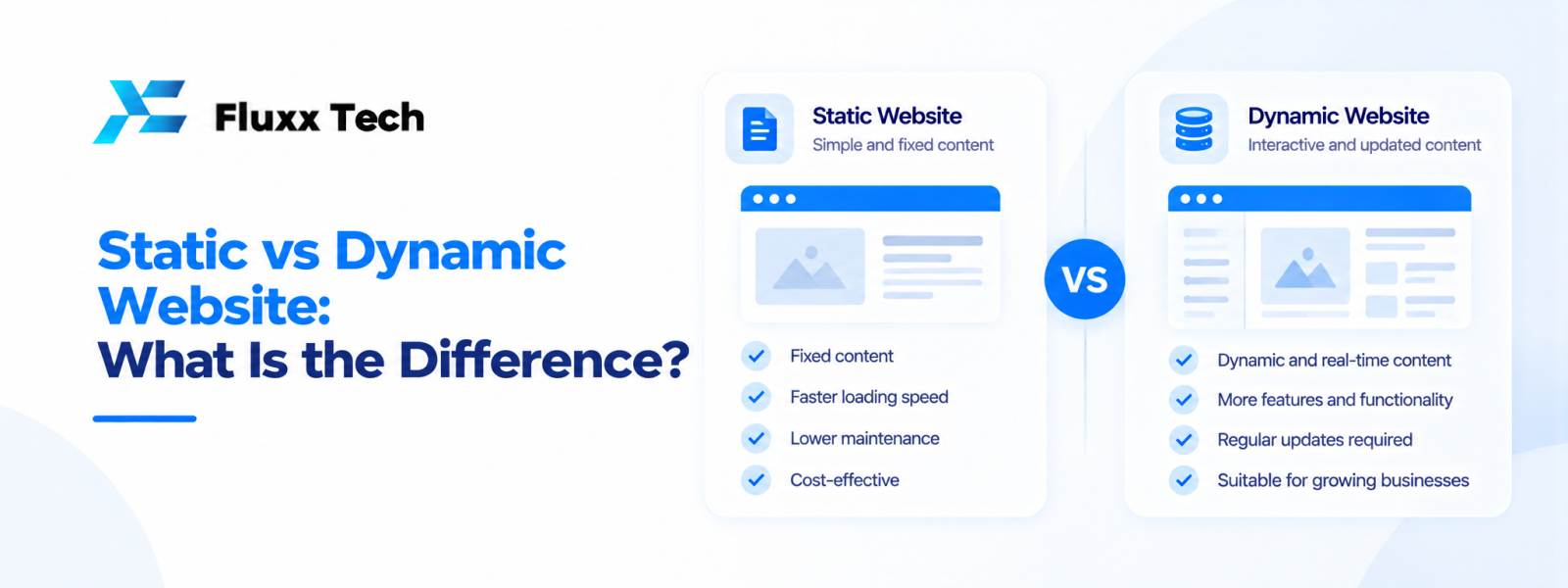
When planning a new site, businesses often ask whether they need a static or dynamic website. The difference affects how content is stored, updated and delivered, but the labels alone do not determine quality. A static website can be fast and straightforward for stable content, while a dynamic website can generate pages from data and support changing information or user-specific features. The right choice depends on how frequently the site changes, who updates it and what visitors need to do.
What is a static website?
How it works
A static site typically serves prebuilt files such as HTML, CSS, JavaScript and images. Each page is prepared ahead of a visitor's request, although modern static sites can also use client-side services.
Advantages
Static sites can be simple to host, have fewer server-side components and work well for stable informational content. Their architecture can reduce some maintenance needs, but updates and security still matter.
Limitations
Frequent content changes may require a publishing workflow or developer support unless a content management layer is added. Personalised functions and data-driven workflows may need external services or additional architecture.
What is a dynamic website?
How it works
A dynamic website can generate or update content using server-side code, databases, APIs or a content management system. The displayed content may depend on stored information or user actions.
Advantages
Dynamic sites can support blogs, product catalogues, user accounts, bookings, dashboards and other data-driven functions. Content editors may be able to update information without manually changing each page.
Limitations
The site may need database maintenance, software updates, access controls and more detailed monitoring. Complexity depends on the implementation, not simply the label.
Static vs dynamic website: compare the options
Content changes
Static sites suit content that changes less often or has a controlled build process. Dynamic sites can suit frequent updates or content drawn from databases.
Interactivity
A static site can still include interactive browser features, forms and external services. Dynamic server-side behaviour is useful when the application must process data, manage accounts or enforce business rules.
Maintenance
Static delivery may reduce server-side maintenance, while dynamic sites often require ongoing application and database care. Both need backups or source control, security reviews and content updates.
Performance and hosting
Either architecture can perform well when designed and hosted appropriately. Measure the actual requirements rather than assuming static always means fast or dynamic always means slow.
Cost and flexibility
The total cost depends on build complexity, content workflow, hosting, integrations and support. Compare the full lifecycle rather than only the initial build.
Which types of websites fit each approach?
Static site examples
A simple campaign landing page, brochure site or documentation site with stable content may be a good fit.
Dynamic site examples
An online store, customer portal, booking system or site with frequently updated content may need dynamic capabilities.
Hybrid approaches
A site can combine prebuilt pages with dynamic services or APIs. The architecture should reflect actual needs rather than forcing every page into one pattern.
How to choose a website for business
List the content
Identify which pages change often and who needs to update them.
Map user actions
Decide whether visitors need to log in, book, buy, search data or manage records.
Check integration needs
List required connections to payments, inventory, CRM, booking or other systems.
Plan for maintenance
Confirm who will update content, manage dependencies, secure data and handle issues after launch.
Frequently Asked Questions
What is the main difference between static and dynamic websites?
Static sites typically serve prebuilt files, while dynamic sites can generate or update content using data, server logic or a CMS.
Can a static website have forms?
Yes. Forms can use external services or APIs, depending on the required workflow.
Is a dynamic website always slower?
No. Performance depends on architecture, caching, hosting, code and page weight.
Which website type is best for a small business?
Choose based on content updates, user actions, integrations and maintenance capacity.
Can a website combine static and dynamic features?
Yes. Many architectures combine prebuilt content with dynamic services where needed.
Conclusion
Static vs dynamic website is a choice about content delivery, functionality and maintenance. Static sites can suit stable information, while dynamic sites support data-driven workflows. Map your content and user needs before selecting the architecture.