Fluxx Tech
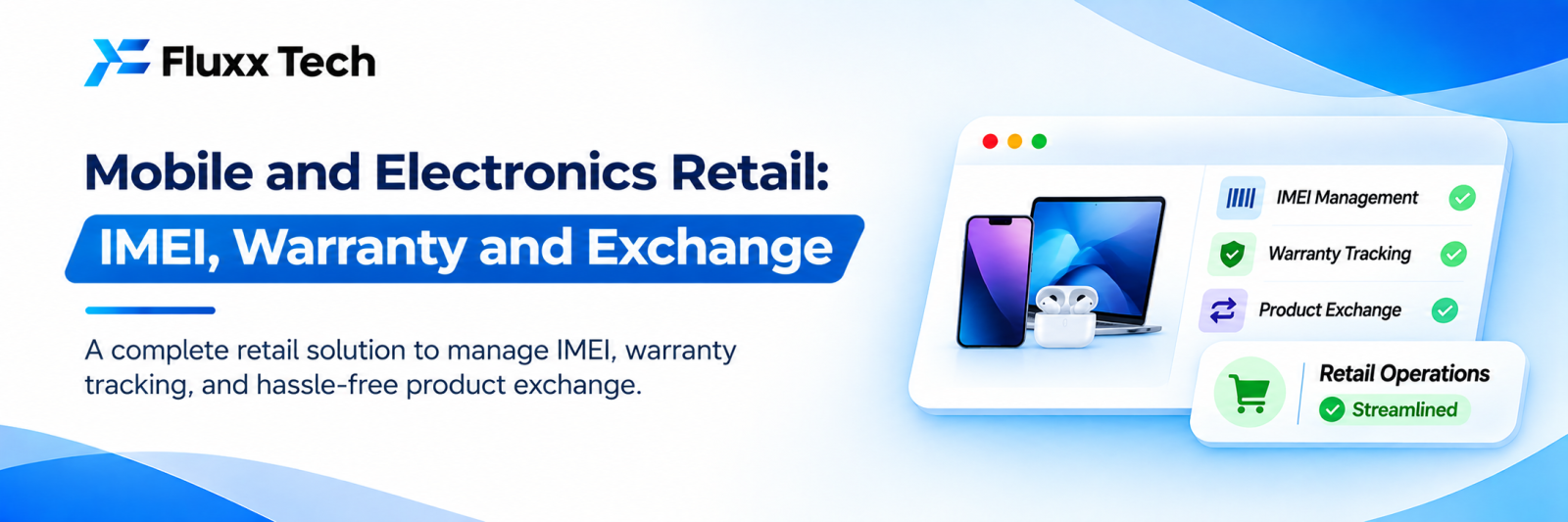
A mobile shop sells a product that is individually identifiable, carries a warranty, often comes back for service, is frequently bought on finance, and is usually accompanied by an old phone being exchanged.
Every one of those needs a record tied to a specific unit, not just to a model. That is why serial-level tracking is the foundation of this trade.
IMEI and serial tracking
Every handset, every laptop, every appliance has a unique number. Track it from purchase to sale.
• IMEI or serial captured at purchase receipt, by scanning
• Linked to the supplier invoice
• Linked to the customer at sale
• Warranty start date from the sale date
• Service history against the same unit
• Resale tracking for exchanged devices
This gives you:
• Proof of which unit went to which customer, which settles warranty disputes
• Theft and loss traceability
• Accurate stock, since two units of the same model are not interchangeable in records
• The ability to answer “when did I buy this phone?” years later
Scan, never type. A 15-digit IMEI typed by hand will be wrong often enough to matter.
Exchange and buyback
Old-device exchange is standard and is where margin is made or lost.
• Record the old device: model, IMEI, condition grade, accessories included
• Condition assessment checklist: screen, body, battery health, functionality
• Photographs of the device received
• Valuation applied and who approved it
• Customer ID verification, which protects you against receiving stolen devices
• Where the device goes: refurbished, resold, sent to a buyer
Keep the verification record. Buying a stolen handset without any identity record is a problem you do not want.
Track the refurbished stock separately with its own cost, condition grade and warranty terms.
Warranty management
Three parties and two kinds of warranty:
Type | Handled by |
Manufacturer warranty | Brand service centre |
Dealer warranty or extended plan | You |
Accessories warranty | Usually shorter, often disputed |
The software should:
• Show warranty status instantly from the IMEI
• Record claims raised with the brand
• Track replacement units issued and received
• Handle DOA (dead on arrival) replacements, which have tight time limits
• Keep the service job linked to the original sale
A customer walking in with a complaint should be identified in ten seconds from the IMEI, with their purchase date and warranty status on screen.
EMI and finance
A large share of sales go through finance partners.
• Record which financier, scheme and tenure
• Down payment collected versus financed amount
• Documents collected per the financier’s requirement
• Subvention and processing fee handling
• Settlement from the financier tracked against the sale
• Reconciliation: which sales have been settled and which are pending
Unreconciled financier settlements are a common and material gap. Track them like receivables, because that is what they are.
Service jobs
Most mobile shops also repair.
• Job card with device, IMEI, complaint, accessories received, condition
• Photographs at intake, which prevents “it was not scratched before” disputes
• Estimate and customer approval
• Parts used, from your spares stock
• Technician assigned
• Status: diagnosis, awaiting parts, awaiting approval, ready
• Ready-for-delivery notification on WhatsApp
• Warranty on the repair itself
See our vehicle service centre software guide; the job card discipline is the same idea.
Spares and accessories
• Accessories are high-margin and high-volume; track them properly
• Spares linked to models, so staff can find the right part
• Fast-moving accessories with reorder levels
• Bundle offers: phone plus case plus screen guard
Accessories often contribute more margin than handsets. Many shops never measure that separately, and so under-invest in it.
Brand schemes and reimbursements
Manufacturer schemes in electronics retail are complex: price protection, volume incentives, display incentives, exchange support, promotional funding.
• Record scheme terms and qualifying conditions
• Track eligibility as sales happen
• Claim submission and status
• Amount received versus claimed
This is routinely under-claimed because the paperwork is tedious. Software that tracks eligibility automatically pays for itself here alone.
Compliance
• GST with correct rates and e-invoicing where applicable
• E-waste handling obligations through authorised handlers
• Any identity verification requirements that apply to device purchase or exchange in your state
• Customer personal data, including ID documents collected for finance
Confirm current obligations with your CA and legal adviser. This article is not legal advice.
Reports
Report | Decision |
Model-wise sales and margin | Buying decisions |
Accessories attach rate | Upsell performance |
Exchange volume and refurb margin | A second business line |
Warranty claims by model | Which brands cost you time |
Service jobs: volume, TAT, repeat repairs | Service quality |
Financier settlements pending | Cash |
Scheme claims pending | Money owed to you |
Ageing stock by IMEI | Devices losing value daily |
Ageing stock matters more here than in most retail: a handset model drops in value every month it sits. A report of units held longer than 60 days is a direct call to action.
Frequently asked questions
Is IMEI tracking really necessary? Yes. Warranty, service, exchange, theft traceability and stock accuracy all depend on it.
Can one system handle sales and service? It should. The service job needs the sale record, and the customer expects one shop, not two systems.
What is most often missed? Financier settlement reconciliation and unclaimed brand schemes. Both are real money.