Fluxx Tech
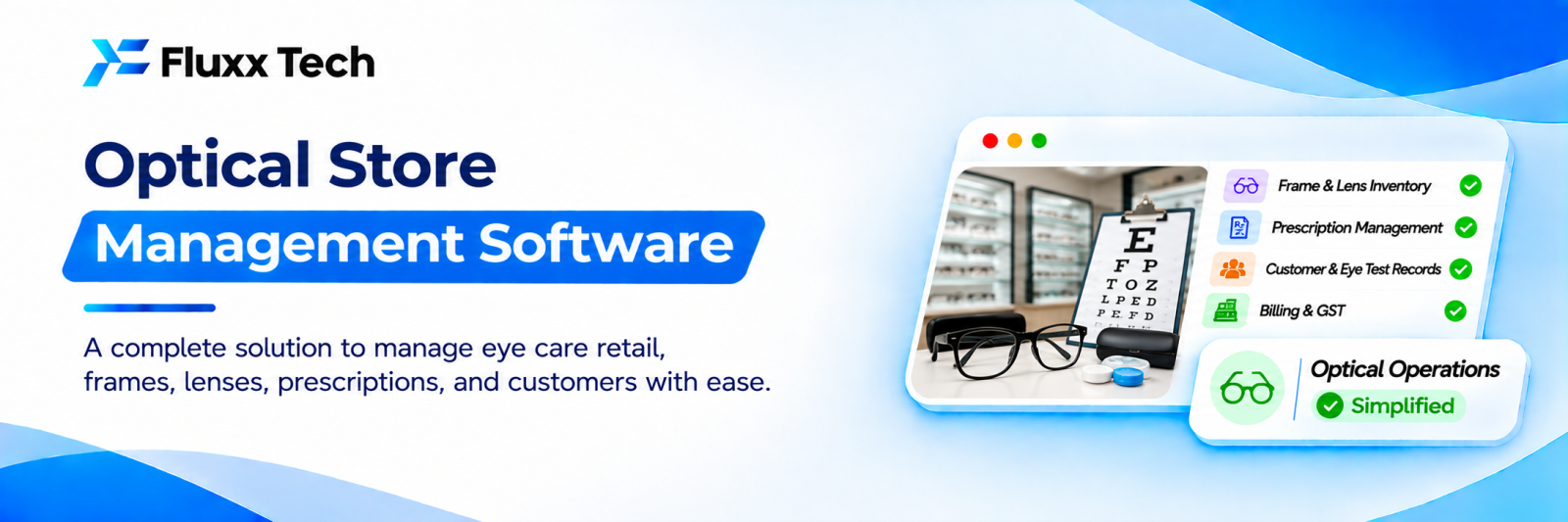
An optical store sells a product that is manufactured to order for one person. The frame comes from stock; the lens is cut to a prescription; the fitting is done in-house or at a lab. Between the sale and the delivery sit several steps that each take a day and can each go wrong.
The business depends on two records: the prescription, and the job.
Prescription records
• Customer details
• Prescription: sphere, cylinder, axis, add, PD, for each eye
• Prescribed by, and date
• Previous prescriptions, kept as history
• Eye test done in-store, if you offer it, with the optometrist’s name
• Next test due date
Prescription history is both clinically useful and commercially valuable: a customer whose power changed last year is due for a check this year, and only you know that.
This is health information. Restrict access, do not share it, and confirm your obligations under the DPDP framework with a legal adviser.
The job: sale to delivery
Customer selects frame and lens type
↓
Order created: frame + lens specification + prescription
↓
Lens ordered from supplier or lab, or cut in-house
↓
Lens received, quality checked against prescription
↓
Fitting and edging
↓
Final quality check: power verification, alignment
↓
Customer notified, collection, trial fit, adjustment
Each step needs a status and a date. The customer asking “when will it be ready?” should get an accurate answer from any staff member.
Lens ordering
• Lens type: single vision, bifocal, progressive
• Material: CR39, polycarbonate, high index
• Coatings: anti-reflective, blue cut, photochromic, hard coat
• Brand and series
• Supplier or lab, with their reference number
• Expected delivery date
• Cost and selling price
Lens is usually the larger part of both the price and the margin. Recording coating and brand accurately matters: a customer charged for a premium coating must receive it, and a supplier billing for one must have supplied it.
Frame inventory
• Brand, model, colour, size
• Barcode per piece
• Cost and MRP
• Ageing: frames held over [X] months
• Display versus storage location
• Damaged or broken frames
Frame ageing is the key stock report. Optical stock does not spoil, it goes out of fashion, and capital sits in it quietly. A list of frames held over six months, with their cost, usually prompts a clearance decision that should have happened earlier.
Contact lenses
A repeat-purchase business with a natural reminder cycle.
• Prescription and lens specification
• Pack size and replacement schedule: daily, fortnightly, monthly
• Expected reorder date, calculated from supply quantity
• Reminder sent before they run out
• Solution and accessories attach
Contact lens reorder reminders are among the easiest recurring revenue in this trade and are frequently not done at all.
Insurance and corporate claims
Where you handle them:
• Insurer or corporate scheme
• Eligibility and limit
• Pre-authorisation, where required
• Claim submission with documents
• Settlement tracking against each claim
• Outstanding from insurers
Treat insurer receivables like any other receivable, with ageing.
Reminders that bring customers back
Reminder | Timing |
Eye test due | 12 months, or per optometrist advice |
Contact lens reorder | Before supply runs out |
Spectacle age | 18–24 months, when coatings and fit degrade |
Warranty expiry on frames or lenses | Before it lapses |
Order ready for collection | Immediately |
Adjustment and cleaning offer | Periodic, brings people into the store |
The free adjustment and cleaning offer is a good footfall driver: the customer comes in, and a meaningful share buy something.
Quality and returns
• Power verification record before delivery, with the result
• Customer adaptation issues, especially with progressives
• Remake policy: who pays, within what period
• Remake rate by lens type and by lab
Remake rate is a cost everyone absorbs quietly. Tracking it by lab and by staff member usually shows where the problem is.
Reports
Report | Decision |
Sales by frame brand and lens type | Buying |
Margin: frame vs lens vs contact lens | Where profit comes from |
Jobs in progress, by stage | Daily operations |
Jobs delayed past promise date | Service |
Frame ageing | Capital stuck |
Remake rate | Quality cost |
Eye tests done vs conversion to sale | Optometry value |
Reminder responses | Retention |
Frequently asked questions
Can it handle in-house eye testing records? Yes, and it should link the test to the prescription and the sale. Treat it as health data.
Does it work for a single-store shop? Yes. Job tracking and reminders help from day one.
What is most often missed? Contact lens reorder reminders and frame ageing. Both are straightforward revenue and capital gains.